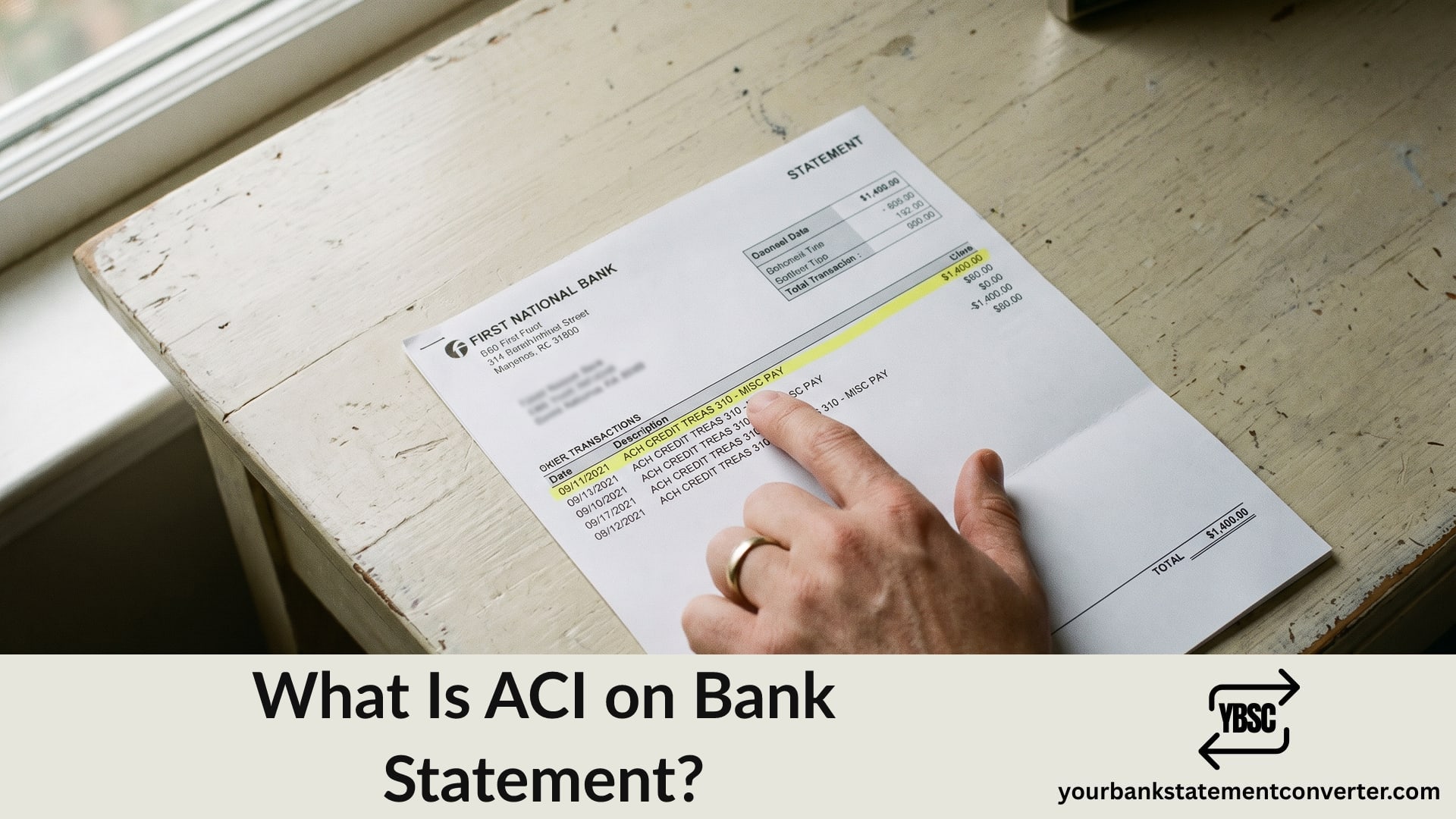
Three letters can point at two completely unrelated businesses, and the difference here matters a great deal. ACI on a bank statement is either a payment processor handling a bill for another company, or a debt collection agency collecting on a creditor’s behalf.
This guide explains both, shows how to tell them apart in seconds, and sets out what to do in each case.
Key Takeaways
- ACI Worldwide is a payment processor used by utilities, insurers and tax bodies.
- ACI-UK Limited is an FCA-regulated debt collection agency.
- The rest of the descriptor usually tells you which one you are looking at.
- A processor entry carries the original company’s name alongside ACI.
- A debt collection payment means an account was passed to a collector.
The Two Companies Behind the Initials
Both are real, established and unrelated to each other.
ACI Worldwide is a payments technology company. Utilities, insurers, financial services firms and tax authorities use it to take customer payments, so the name reaches your statement even though you never dealt with ACI directly.
ACI-UK Limited is a debt collection agency regulated by the Financial Conduct Authority. It collects on behalf of creditors and offers payment plans and instalment arrangements to people repaying a debt.
Sharing initials is coincidence. Nothing links the two businesses.
How to Tell Which ACI on Bank Statement Entry You Have
Read the whole descriptor rather than the first three letters.
ACI Worldwide states that the organisation you were actually paying appears in the transaction description alongside ACI’s name. So a processor entry usually looks like a company name plus ACI, not ACI on its own.
Work through this:
- Look for a second name in the line, such as a utility, council or insurer
- Check the amount against a bill you were expecting
- Consider the payment type, since a one-off card payment behaves differently from a monthly Direct Debit
- Think about recent letters, because collection accounts always follow written contact
A payment matching a bill you meant to pay points to the processor. One you did not knowingly set up, following letters about arrears, points to collection.
Descriptors naming a processor rather than the company you dealt with are extremely common, and our guide to what the abbreviations on a bank statement mean covers the pattern.
If It Is the Payment Processor
Nothing unusual is happening, and no extra fee applies to you.
The company you were paying chose ACI to handle its payments. Your money reaches them as normal, and the processor’s name appears simply because it took the transaction.
Check the amount against the bill. Where the two match, the entry needs no action at all.
If It Is Debt Collection
Different situation, and worth handling properly rather than ignoring.
An account reaching a collection agency means a creditor passed the debt on. You should have received letters first, so check your post and email before anything else.
Things worth knowing:
- Ask for proof of the debt before paying anything you do not recognise
- A regulated agency must treat you fairly, since the FCA oversees them
- Payment plans are usually available, including instalments you can afford
- Free debt advice exists, from StepChange, Citizens Advice and National Debtline
- Never ignore the letters, because the alternatives get worse rather than better
If the debt is not yours, say so in writing and ask for verification. Agencies do pursue the wrong person occasionally, and a written challenge pauses collection while they check.
If You Did Not Set Up the Payment
Take this seriously in either case.
Where money left your account and you authorised nothing, contact your bank. A Direct Debit taken in error is refundable immediately under the Direct Debit Guarantee. An unauthorised card payment should be disputed and the card replaced.
Check the surrounding entries too, since an account under pressure is worth reviewing in full. Reading what is on a bank statement helps you work through the transaction table properly.
Seeing the Whole Picture
One ACI on bank statement line tells you very little on its own.
Our bank statement converter turns PDF statements into clean, searchable spreadsheets. Filter for the initials, sort by date, and the pattern shows up: regular amounts matching a bill point to the processor, while irregular payments following letters point to collection. Having the full list also helps if you are putting a repayment plan together.
Conclusion
To sum up, ACI on a bank statement points to one of two unrelated businesses. ACI Worldwide is a payment processor used by utilities, insurers and tax bodies, and its entries usually carry the original company’s name alongside. ACI-UK Limited is an FCA-regulated debt collection agency, and a payment to them follows an account being passed on by a creditor. Read the full descriptor and match it against a bill to tell which applies.
FAQ
1.What does ACI mean on a bank statement?
Either ACI Worldwide, a payment processor used by utilities, insurers and tax bodies, or ACI-UK Limited, an FCA-regulated debt collection agency. The two are unrelated.
2.How do I tell which company charged me?
Read the full descriptor. A processor entry normally carries the name of the organisation you were actually paying alongside ACI. Match the amount against a bill you expected.
3.Is ACI a scam?
No. Both companies are legitimate, and ACI-UK Limited is regulated by the Financial Conduct Authority. Always ask for proof of a debt you do not recognise, though.
4.Do I pay extra when ACI processes my payment?
No. The company you are paying chose the processor and carries that cost. Your payment reaches them as normal.
5.A debt collector is taking payments. What are my rights?
You can request proof of the debt, ask for an affordable payment plan, and expect fair treatment under FCA rules. Free advice is available from StepChange, Citizens Advice and National Debtline.
6.The debt is not mine. What should I do?
Say so in writing and ask for verification. A written challenge normally pauses collection while the agency checks its records.