
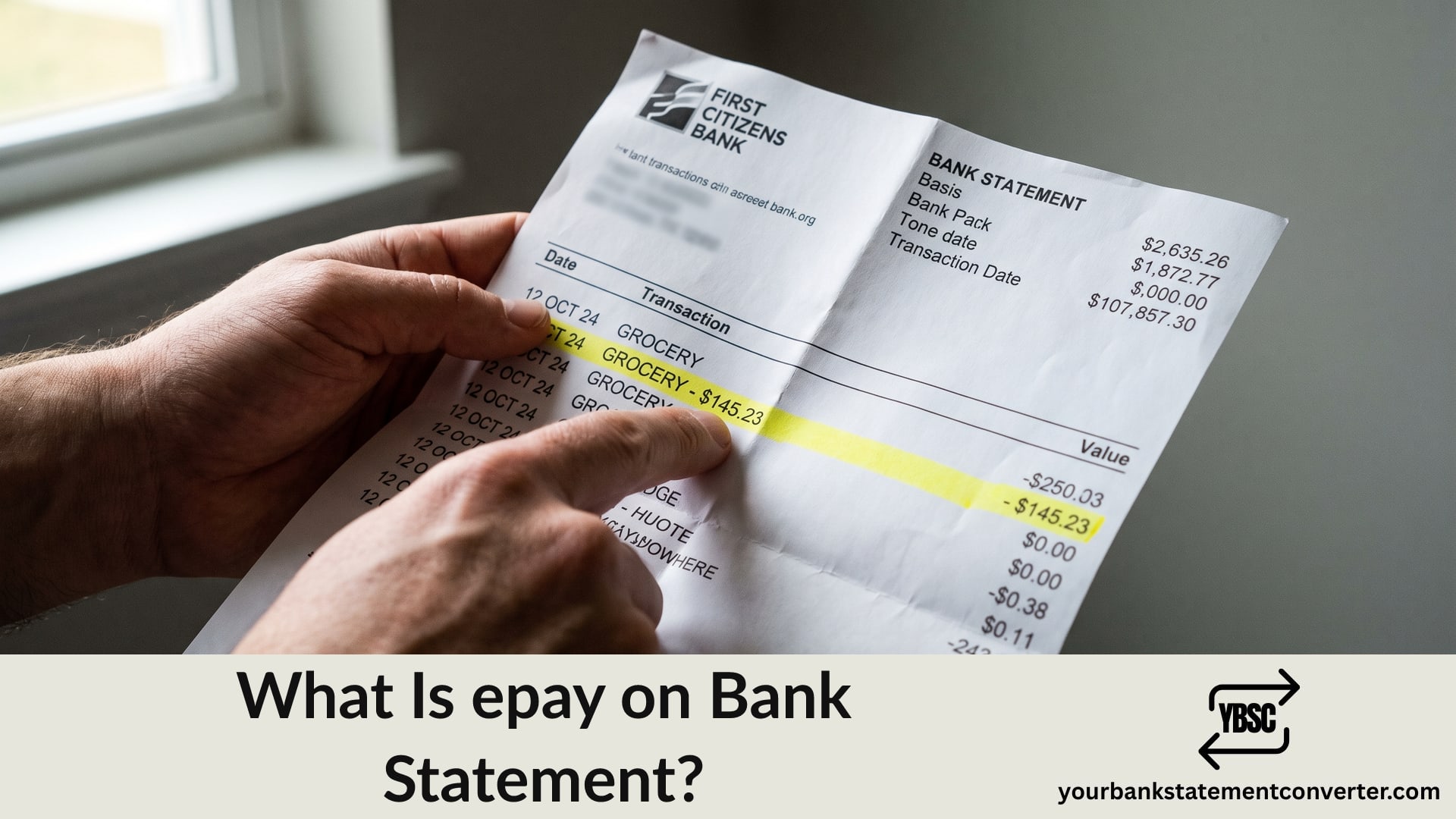
Buying a gift card in a shop produces a statement entry that names neither the shop nor the brand on the card. epay on a bank statement is that entry, and it covers gift cards, mobile top-ups and digital credit bought at a till or online.
This guide explains who epay is, why the brand you bought is missing, how to match the charge to a purchase, and what to do when the amount looks wrong.
Key Takeaways
- epay is part of Euronet Worldwide, a global payments company.
- It distributes gift cards, mobile top-ups and digital content codes.
- The brand on the card does not appear, because epay processes the sale.
- Entries commonly follow supermarket, newsagent and convenience store purchases.
- Round amounts such as £10, £20 or £25 are typical, matching gift card values.
Who epay Is
epay is the prepaid and digital payments arm of Euronet Worldwide, operating a network of hundreds of thousands of point-of-sale terminals across more than 60 countries.
Its role sits between the brands and the shops. Rather than every retailer arranging terms with every gift card brand, epay distributes the range and processes the payment.
That covers a wide catalogue:
- Gaming credit for consoles and PC platforms
- Streaming and music gift cards
- Mobile airtime top-ups for pay-as-you-go phones
- Retail and restaurant gift cards
- App store and digital content vouchers
Why the Brand You Bought Is Missing
This is the whole reason the entry looks unfamiliar, and it is entirely routine.
When you buy a gift card at a till, the shop is not selling you the brand directly. epay’s system activates the card, and epay takes the payment.
So three names are involved and only one reaches your bank:
- The brand on the card, which you recognise
- The shop where you bought it, which you also recognise
- epay, which processed the activation and appears on your statement
Descriptors naming a processor rather than a product are extremely common. Our guide to what the abbreviations on a bank statement mean works through the pattern.
Matching the Charge to a Purchase
Round numbers are your strongest clue.
- Check for a round amount such as £10, £15, £20, £25 or £50, which matches standard gift card values
- Think about recent shop visits, since most of these sales happen at a till
- Ask family members, because gift cards and phone top-ups are frequently bought for others
- Look for the physical card or receipt, which names the brand
- Check the date against birthdays, Christmas or a phone running out of credit
Where the date matches a supermarket or newsagent visit, a gift card or top-up is almost always the answer.
When the Amount Looks Wrong
A few situations do warrant checking rather than shrugging.
The amount is not round. Some top-ups and cards come in odd denominations, so this is not automatically an error. Confirm it against a receipt.
Several charges on one day. Buying more than one card produces more than one line. That is normal, though it is also what a compromised card looks like.
The amount is large. Gift cards have upper limits. A substantial epay on bank statement charge deserves a check, especially given how often gift cards feature in scams.
A Word on Gift Card Scams
This is worth raising, because the pattern is common and the losses are rarely recoverable.
Fraudsters frequently ask victims to buy gift cards and read out the codes. The approach is presented as a payment to HMRC, a utility, a police fine or a relative in trouble.
Remember:
- No legitimate organisation asks to be paid in gift cards
- HMRC, banks and the police never request payment this way
- Once a code is shared, the money is generally gone
If an elderly or vulnerable relative has unexplained gift card purchases, that is worth a conversation. Report suspected fraud to your bank immediately, because speed matters.
Checking for a Duplicate
Till errors happen, and they are easy to spot once you look.
Compare the posted entry against your receipt. Where two identical charges land on the same day and you only bought one card, ask your bank to check for a duplicate authorisation.
Pending amounts can also appear and disappear as a transaction settles. That sometimes looks like a second charge when only one will ever complete. Reading what is on a bank statement explains how pending items and balances relate.
Totting Up a Year of Top-Ups
Small regular top-ups add up in a way that monthly glances never reveal.
Our bank statement converter turns PDF statements into clean, searchable spreadsheets. Filter the description column for the processor name and total it. The annual figure often makes a monthly contract look better value than pay-as-you-go.
Conclusion
To sum up, epay on a bank statement is a purchase processed by epay, the prepaid arm of Euronet Worldwide. It covers gift cards, mobile top-ups and digital content codes. The brand on the card never appears because epay handles the activation and takes the payment. Match a round amount to a shop visit, check receipts for anything unusual, and treat unexplained gift card spending by a vulnerable relative as a possible scam.
FAQ
1.What is epay on a bank statement?
It is a purchase processed by epay, the prepaid and digital payments arm of Euronet Worldwide. The charge usually covers a gift card, a mobile top-up or a digital content code.
2.Why does the gift card brand not appear?
Because epay processes the activation and takes the payment. The shop sells the card, but the transaction runs through epay’s system, which is what your bank records.
3.Why is the amount a round number?
Gift cards and top-ups come in fixed denominations such as £10, £20 or £25. A round figure matching one of those values is the normal pattern.
4.I have several epay charges on the same day. Is that wrong?
Not necessarily. Buying more than one card produces more than one line. Check your receipts, since the same pattern can also indicate a compromised card.
5.Could this be a scam?
The charge itself is a legitimate processor’s entry, but gift cards are heavily used in fraud. No genuine organisation asks to be paid in gift card codes, so unexplained purchases are worth investigating.
6.How do I dispute an epay charge?
Contact your bank with the date, amount and any receipt. Where a gift card code has already been shared with a fraudster, report it immediately, because recovery depends on speed.






