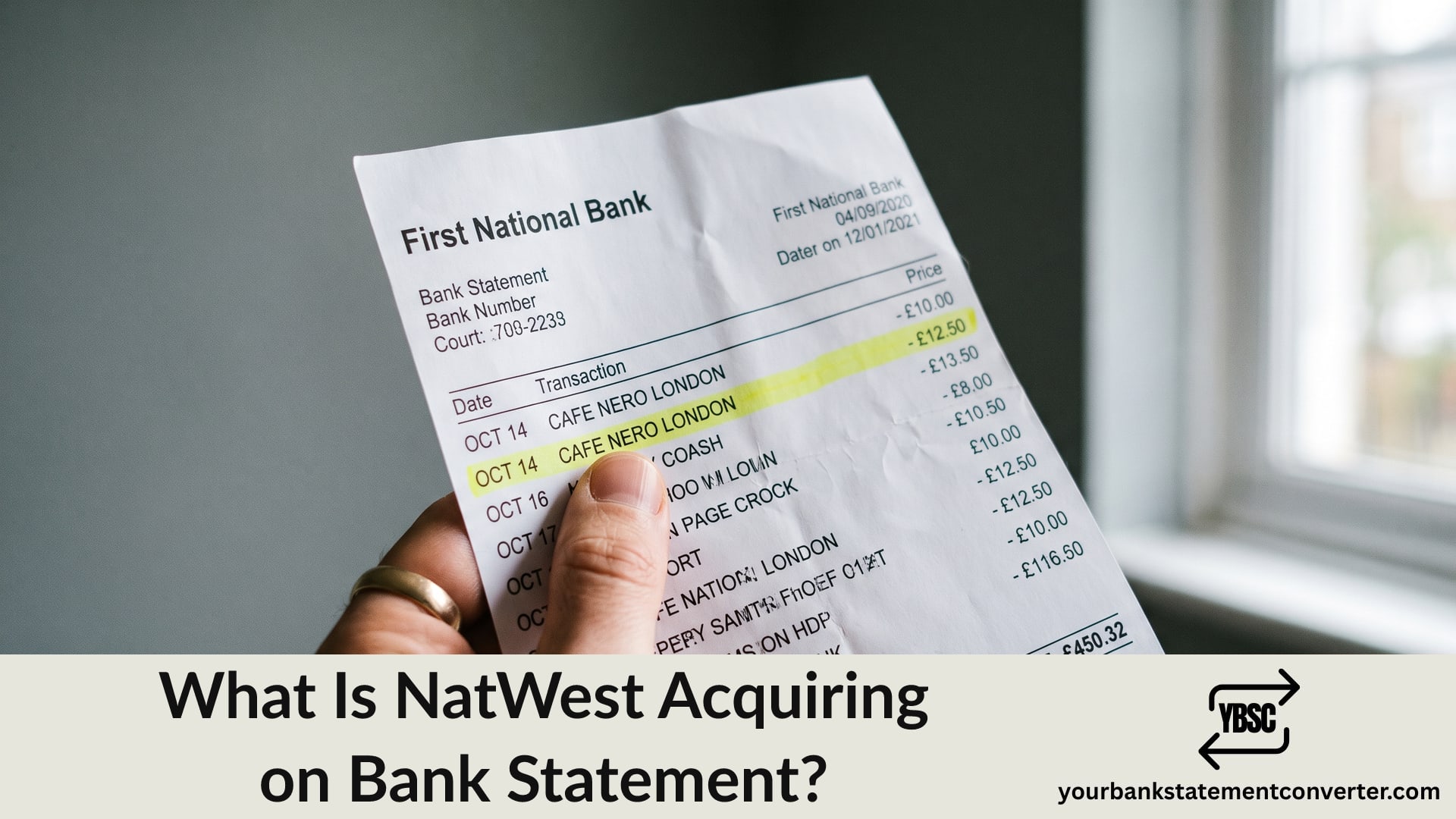
The same descriptor can mean two very different things depending on whose account it lands in. NatWest Acquiring on a bank statement is usually card takings arriving in a business account, though it can also be the fee charged for processing them.
This guide explains what merchant acquiring is, how to tell settlement from fees, why the amount rarely matches a day’s takings, and what a personal account holder should make of it.
Key Takeaways
- Acquiring means processing card payments on a business’s behalf.
- On a business account, the entry is usually card takings being settled.
- A separate entry covers the merchant service charge, the processing fee.
- Tyl by NatWest is the bank’s merchant acquiring brand, launched in 2019.
- Personal customers pay nothing for acquiring; the fee falls on the merchant.
What Merchant Acquiring Actually Is
An acquirer sits between a business and the card networks. When a customer pays by card, the acquirer collects the money from their bank and passes it to the business.
NatWest entered this market directly in 2019 under the brand Tyl by NatWest. It now competes with the independent processors that long dominated it.
So the descriptor tells you a card payment went through rather than describing what was bought. That is why it looks anonymous. The system reaches your statement, not the purchase.
Is NatWest Acquiring on Bank Statement Money In or Out?
Check the column first, because it decides which explanation applies.
Money in is settlement. The acquirer is paying over the card takings your business has collected, usually the previous working day’s.
Money out is the merchant service charge. That is the fee for processing, normally taken monthly, sometimes with terminal rental included.
Getting the direction right changes how you read the whole line. Our guide to what are debits and credits on a bank statement explains how the columns work.
Why Settlement Rarely Matches Your Till
This trips up a lot of small business owners, and the reasons are all mundane.
A settlement figure differs from the day’s takings because:
- Refunds are netted off before the money arrives
- Chargebacks are deducted when a customer disputes a payment
- Weekends and bank holidays push settlements together into one payment
- Fees may be deducted from the gross rather than billed separately
- Cut-off times mean late trading lands in the next day’s batch
Reconciling a NatWest Acquiring on bank statement figure against a single day’s Z report therefore fails routinely. Compare a week against a week instead, and the two usually line up.
Understanding the Merchant Service Charge
Fees are where the real money goes, and they are worth reading closely.
A typical charge combines:
- A percentage of each transaction, varying by card type
- A fixed pence amount per transaction
- Terminal rental, if hardware came with the account
- Authorisation fees and other small per-item costs
Commercial and international cards cost more to accept than a standard UK consumer debit card. That is why the effective rate moves month to month even when takings hold steady.
If You Are a Personal Customer
Different question entirely, and a much shorter answer.
Seeing this descriptor on a personal account usually means the shop you paid used NatWest to process the payment. You pay no fee, because the merchant carries the cost of acquiring.
The merchant’s name normally appears alongside the acquirer’s. Without it, the entry looks anonymous for the same reason as any processor-named line. Our guide to what the abbreviations on a bank statement mean explains that in detail.
Nobody recognises the payment at all? Treat it as any unfamiliar card charge. Contact your bank, ask for the merchant reference, and request a replacement card if it was not authorised.
Chargebacks and What They Do to the Figure
Worth understanding before a settlement suddenly comes up short.
A chargeback happens when a cardholder disputes a payment and their bank reverses it. The money comes back out of the merchant’s account, often weeks after the original sale.
For a business that means:
- A settlement smaller than expected without an obvious cause
- A separate debit where the dispute is handled individually
- A window to supply evidence and contest the claim
Keeping receipts, delivery confirmations and terminal records makes a successful challenge far more likely.
Reconciling a Year of Settlements
Daily settlements and monthly fees are painful to reconcile from PDFs.
Our bank statement converter turns PDF statements into clean, searchable spreadsheets. Filter for the acquirer’s name and split credits from debits. Gross settlement against total fees is the comparison worth making when reviewing your rate.
Conclusion
To sum up, NatWest Acquiring on a bank statement means a card payment was processed through NatWest’s merchant acquiring service. On a business account, money in is settlement of card takings and money out is the merchant service charge. Settlement rarely matches a single day’s till because refunds, chargebacks and cut-off times all shift it. Personal customers pay nothing, since the merchant carries the cost.
FAQ
1.What is NatWest Acquiring on a bank statement?
It means a card payment was processed through NatWest’s merchant acquiring service. Acquiring is the business of collecting card payments on a merchant’s behalf.
2.Is it money coming in or going out?
Both are possible. On a business account, money in is settlement of card takings, while money out is usually the monthly merchant service charge.
3.Why does the settlement not match my takings?
Refunds and chargebacks are netted off, weekends batch together, and terminal cut-off times push late trading into the next day. Compare a full week rather than a single day.
4.Am I charged a fee as a customer?
No. The merchant pays for card processing. A personal customer sees the descriptor only because the shop used NatWest to process the payment.
5.What is Tyl by NatWest?
Tyl is NatWest’s merchant acquiring brand, launched in 2019 to offer card processing to small and medium businesses.
6.I do not recognise this payment at all. What should I do?
Treat it as any unfamiliar card charge. Contact your bank, ask for the merchant reference, and request a replacement card if the payment was not authorised.