A rewards app that pays you money should not be taking any, which makes this entry worth a closer look. Lux Rewards on a bank statement normally relates to a card-linked cashback service, so a charge under a similar name usually points somewhere else entirely.
This guide explains what the app does, why its entries are usually credits, which similarly named service does charge a monthly fee, and how to tell them apart.
Key Takeaways
- LUX Rewards is a London-based card-linked cashback app, free to use.
- Its entries are normally credits, meaning cashback arriving.
- A separate service, Luxplus, charges a monthly membership fee.
- People report being signed up to Luxplus alongside a purchase.
- Check the column first, because money in and money out mean different things.
What LUX Rewards Does
LUX Rewards is a card-linked rewards platform based in London. You link a debit or credit card, spend as normal at participating places, and earn cashback automatically.
Card-linked means there is nothing to scan or claim. The card transaction itself triggers the reward, which then comes back to you.
Two things follow:
- The app is free to use, so no membership fee applies
- Its statement entries are usually cashback arriving, not charges
That makes a debit under this name worth checking rather than accepting.
Check the Column Before Anything Else
This single step resolves most confusion here, and it takes seconds.
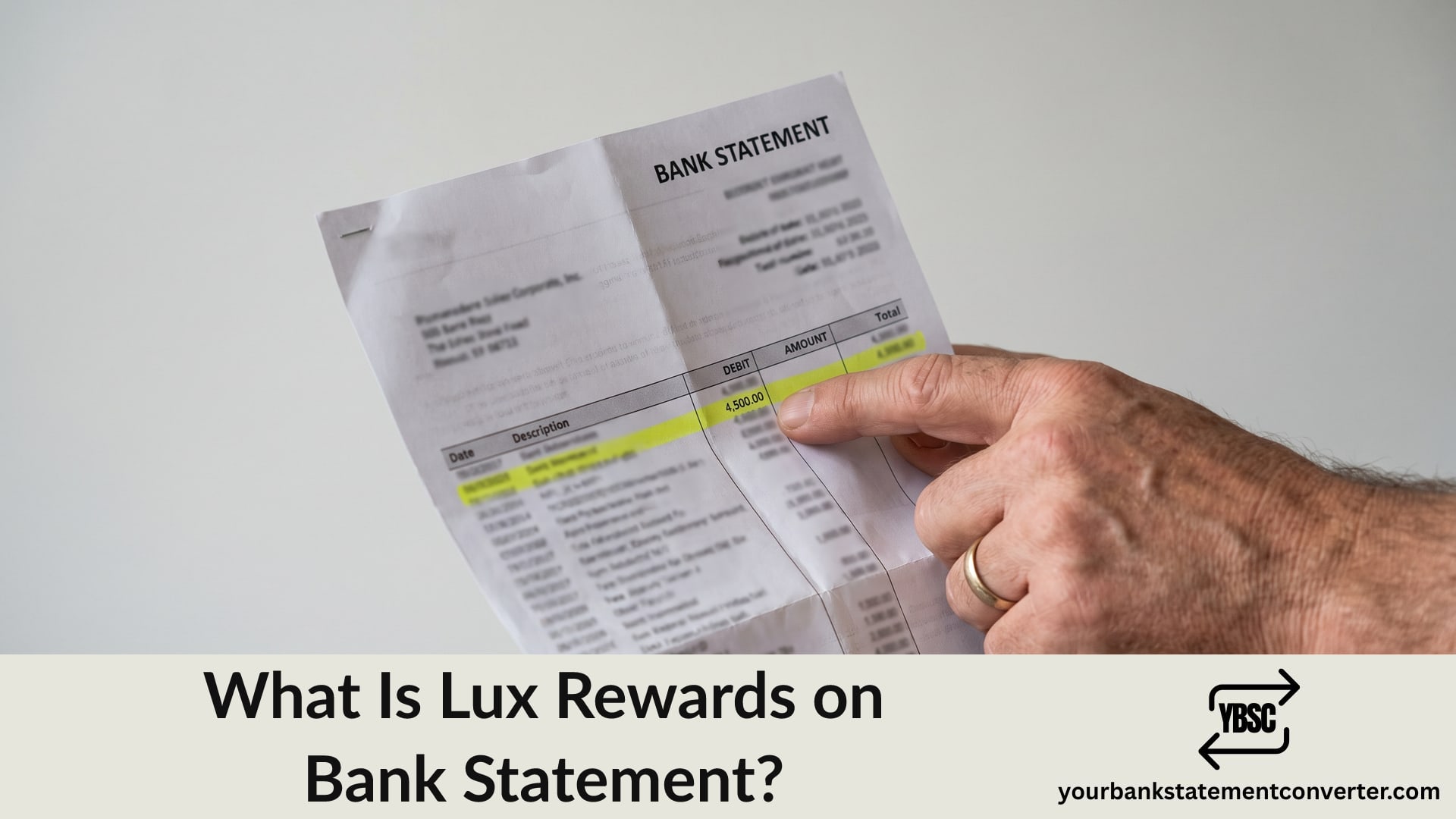
Look at whether the Lux Rewards on bank statement amount sits in the paid-in or paid-out column. Cashback should be money in. If the figure is a credit, nothing has been taken and the entry is simply a reward being paid.
Getting the direction right matters more than the name does, and what are debits and credits on a bank statement explains how to read the two columns when a statement layout is unfamiliar.
The Name That Does Charge, and Why It Is Not Lux Rewards on Bank Statement
Here is the distinction that actually answers most searches.
Luxplus is a separate service running a paid membership, reported at around £8.99 a month. Reviewers describe joining while buying something else, then finding a recurring charge they did not expect.
So if the Lux Rewards on bank statement line is a monthly debit rather than a credit:
- Read the full descriptor carefully, since the names are easy to confuse
- Check the amount against a monthly membership fee
- Look for a first charge shortly after an online purchase
- Search your email for a membership confirmation you may have skimmed past
Confusing two businesses with similar names is easy to do, and our guide to what the abbreviations on a bank statement mean explains why statement descriptors so rarely give you enough to go on.
How an Unwanted Membership Starts
Worth understanding, because it explains a charge that feels like it came from nowhere.
Checkout pages frequently present a membership alongside another transaction. A box arrives pre-ticked, a discount rewards joining, or the recurring terms sit below the fold.
None of that makes the charge unauthorised in a legal sense. It does mean the agreement you made may not be the one you remember, so read the confirmation email before treating it as fraud.
How to Stop a Recurring Charge
Two steps, and skipping either one tends to leave the billing running.
Cancel with the merchant. Use the account area on their site or the contact route in your confirmation email, then keep the confirmation.
Withdraw the payment authority. Tell your bank to stop the recurring card payment. You have a legal right to do this, the bank must act on it, and the merchant’s agreement is not required.
Check the next statement rather than assuming. A cancellation that is not honoured shows up quickly.
Ask about a refund where you never knowingly joined. Raise it with the merchant first, then with your bank if that goes nowhere.
Is the Cashback Worth Anything?
A fair question once you have established nothing is being taken.
Card-linked cashback pays small amounts on ordinary spending, so returns stay modest. Data is the real thing to weigh, because linking a card lets the provider see the transactions that trigger rewards.
Some people find that a reasonable trade and others do not. Either way, knowing what you agreed to beats discovering it later.
Checking What Has Gone In and Out
Small credits and small debits under similar names are exactly what gets missed.
Our bank statement converter turns PDF statements into clean, searchable spreadsheets. Filter for the name, split credits from debits, and you can see at a glance whether you are net up or net down. Where a membership fee has been running quietly, quote that total when asking for a refund.
Conclusion
To sum up, Lux Rewards on a bank statement usually relates to a free card-linked cashback app, so its entries are normally credits rather than charges. A recurring monthly debit under a similar name more often points to Luxplus, a paid membership that people report being enrolled in alongside a purchase. Check which column the amount sits in first, then cancel with the merchant and withdraw the card authority if a fee is running.
FAQ
1.What is Lux Rewards on a bank statement?
It usually relates to LUX Rewards, a London-based card-linked cashback app. That app charges nothing, so its entries are normally cashback credits.
2.Should Lux Rewards charge me anything?
No. The cashback app is free to use. A recurring charge under a similar name is more likely to be a different service.
3.What is the difference between LUX Rewards and Luxplus?
They are separate services. LUX Rewards is a free cashback app. Luxplus operates a paid membership, reported at around £8.99 a month, which some people say they were enrolled in unexpectedly.
4.How do I know whether I have been charged or paid?
Check which column the amount sits in. Cashback appears as money in, while a membership fee appears as money out.
5.How do I cancel a recurring membership fee?
Cancel with the merchant first and keep the confirmation, then tell your bank to withdraw the recurring card authority. Doing only one of the two often leaves the billing active.
6.Can I get a refund for charges I did not intend?
Ask the merchant first, then your bank. Where you never knowingly joined, explain that and ask about a chargeback, quoting the exact dates and amounts.