Mortgage underwriting goes deeper than any other credit check you will face. Understanding what mortgage underwriters look for on bank statements in the UK matters because they examine things a personal loan assessor never touches, starting with where your deposit came from.
This guide covers the checks specific to mortgages, why underwriters ask follow-up questions, and how to prepare so yours go smoothly.
Key Takeaways
- Underwriters trace where your deposit came from, not just that you have it.
- A gifted deposit needs a letter confirming it is a gift, not a loan.
- Income is stress tested against higher interest rates, not just today’s payment.
- Recent credit applications in your statements matter as much as existing debt.
- Expect six months of statements, and expect follow-up questions on anything unusual.
How Mortgage Underwriting Differs From a Normal Credit Check
A loan assessor asks whether you can afford the payments. An underwriter asks that too, then goes further in three directions.
Provenance. Where did the deposit come from? UK anti-money-laundering rules make you evidence the source of funds rather than simply assert it.
Durability. Can you still afford it if rates rise? Underwriters stress test affordability well above the rate you are quoted.
Consistency. Does every document tell the same story? Underwriters cross-check statements, payslips and the application form against each other.
That third point causes most delays. A number that does not reconcile triggers a question, and questions take days.
Deposit Provenance: The Check That Catches People Out
This is the biggest difference from other borrowing, and the one applicants underprepare for.
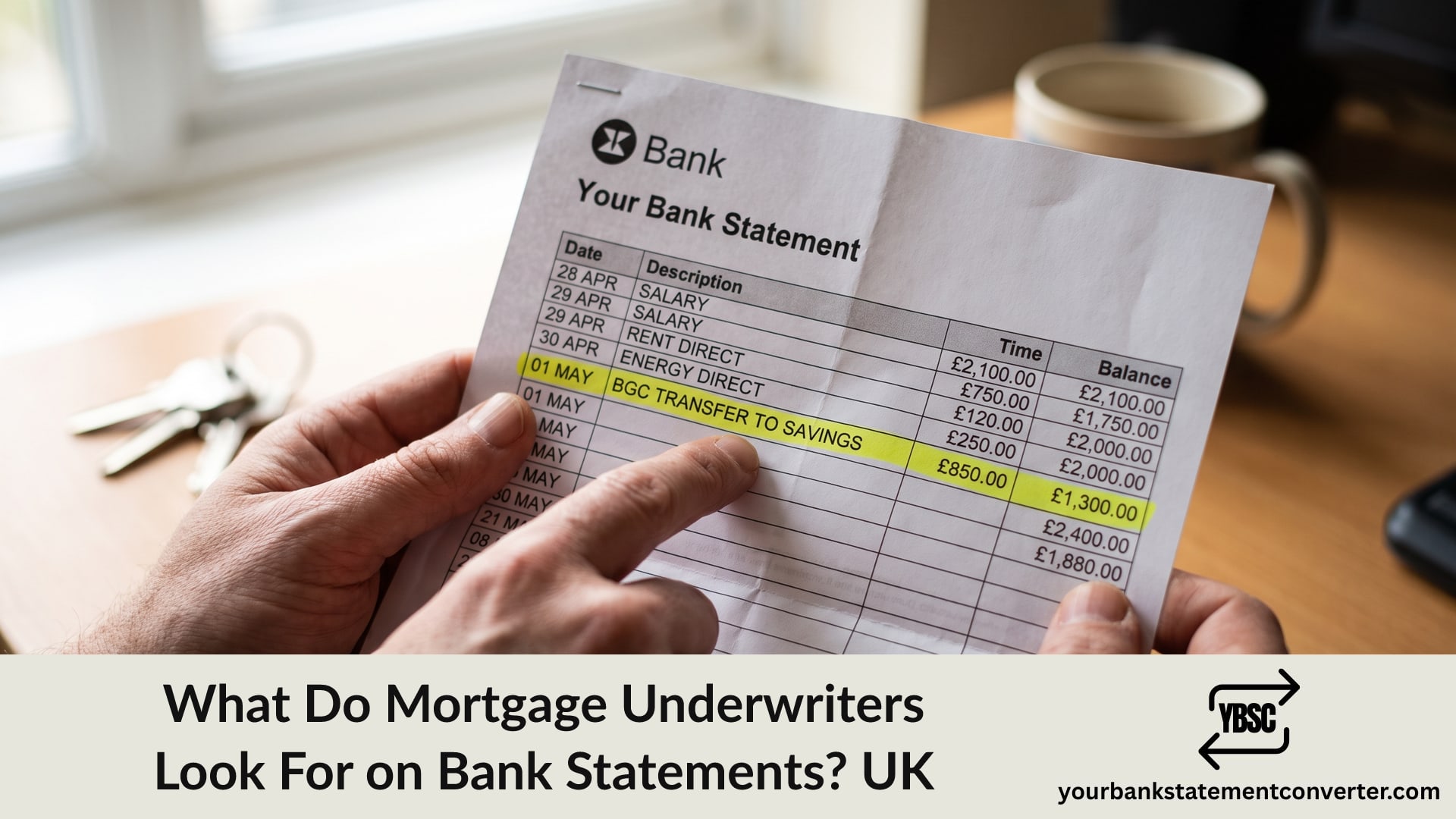
Underwriters need to see your deposit accumulate, which is why they want several months of statements for the account holding it. A balance that simply appears raises an immediate query. Ordinary credits such as a BGC paid in over a counter still need a traceable origin.
Acceptable sources come with evidence attached:
- Savings built over time, visible as regular transfers in
- A gifted deposit, needing a letter from the giver confirming it is a gift with no repayment expected and no stake in the property
- Sale of a property or asset, evidenced by completion statements or a bill of sale
- Inheritance, evidenced by solicitor correspondence
- A bonus, evidenced by the payslip showing it
Sources that cause problems include cash deposits, which are hard to attribute, and borrowed money, since a loan taken to fund a deposit changes your affordability and must be declared.
Income and the Stress Test
Underwriters verify income the same way other lenders do, matching credits against payslips. Then they do something extra.
They apply a stress test, checking whether you could still pay if interest rates rose materially above your quoted rate. That single test explains most affordability declines where the current monthly payment looks comfortable.
Self-employed applicants face more scrutiny. Expect to provide SA302s or tax year overviews alongside statements. Lenders then average your income across two or three years rather than taking it at its best.
Where income arrives irregularly, the pattern matters as much as the total. A steady average built from wildly variable months reads less favourably than the same average built from consistent ones.
What Raises Questions in Your Statements
Underwriters read line by line. Certain entries reliably generate follow-up questions, and knowing what mortgage underwriters look for on bank statements means knowing these.
Gambling. Mortgage underwriting treats this more seriously than other credit does, particularly regular activity or amounts that scale with income.
Undisclosed credit commitments. Payments to lenders missing from your application undermine everything else you declared.
Recent credit applications. New borrowing taken shortly before applying changes your affordability and looks like you are stretching.
Returned Direct Debits. These indicate you ran out of money, which weighs heavily against a long-term commitment.
Large unexplained transfers. Money moving in or out without an obvious reason gets queried, in both directions.
Payday lending. Many UK lenders scrutinise this closely even when you settled it years ago.
Our guide to what lenders look for on bank statements covers the affordability basics that apply across all credit types.
How to Prepare Your Statements
Preparation prevents most delays, and delays are what lose properties.
Gather six months, not three. Mortgages routinely need more than other credit, covering both your current account and the account holding your deposit.
Provide official PDFs. Screenshots and edited files get rejected outright. Editing a statement is fraud.
Write explanations in advance. Any large or unusual transaction is worth a short covering note. Answering before you are asked saves a round trip.
Sort the gifted deposit letter early. If family are contributing, get that letter written before you apply rather than during.
Leave time between events. Applying immediately after a new credit card or a large deposit lands invites questions. A few months of clean statements is worth the wait.
Reading six months across two accounts line by line is slow work. Our bank statement converter turns PDF statements into clean, searchable spreadsheets, so you can total your commitments, trace how the deposit built up, and review your own file the way an underwriter will.
Conclusion
To sum up, what mortgage underwriters look for on bank statements in the UK extends well past affordability. They trace where your deposit came from, stress test your income against higher rates, and cross-check every figure against your payslips and application. Gambling, undisclosed borrowing and recent credit applications generate the most queries. Prepare six clean months, evidence the deposit, and explain anything unusual before an underwriter has to ask.
FAQ
1.What do mortgage underwriters look for on bank statements in the UK?
They verify your income against payslips, measure your committed outgoings, trace the source of your deposit, and stress test affordability against higher interest rates. They also check that every figure matches your application.
2.How many months of bank statements do UK mortgage lenders need?
Six months is common, though some accept three. Expect to provide statements for both your current account and any account holding the deposit.
3.Do mortgage underwriters check where my deposit came from?
Yes. UK anti-money-laundering rules require the source of funds to be evidenced. A deposit that appears suddenly without a traceable origin will be queried.
4.What is a gifted deposit letter?
A signed letter from whoever gives you the money, confirming it is a gift rather than a loan, that no repayment is expected, and that they claim no stake in the property.
5.Does gambling affect a mortgage application?
It can, more than with other credit. Occasional small amounts rarely decide it, but regular activity or amounts that scale with income frequently prompt a decline or further questions.
6.Can I be declined even though I can afford the payments?
Yes. Underwriters stress test affordability against interest rates materially higher than your quoted rate, so an application can fail on that test while today’s payment looks comfortable.