Handing over three months of statements feels intrusive, largely because nobody tells you what happens next. Knowing what lenders look for on bank statements turns that from a black box into a checklist you can prepare for.
This guide covers exactly what gets checked, which patterns help you, which ones cause problems, and what to do before you apply.
Key Takeaways
- Lenders check income stability first, matching what lands in your account against what you declared.
- They assess committed spending, meaning the Direct Debits and standing orders you cannot easily stop.
- Gambling, undisclosed debt and returned payments are the three most common problems.
- They look at your balance trend, not just the closing figure.
- Statements must be complete and unedited, with no gaps between months.
What Do Lenders Look For on Bank Statements First?
Affordability. Every regulated lender in the UK has to show it lent responsibly, and your statements are the evidence.
That breaks into a simple question: after everything you already have to pay, can you afford this new commitment? Every check below feeds into that one judgement, which is the heart of what lenders look for on bank statements.
Income: Consistency Matters More Than Size
The first check matches your declared income against what actually arrives.
Lenders look for regular credits from a consistent source. A salary landing on the same working day each month is the easiest case to assess. They will compare the net figure against your payslips, so those two need to agree.
Self-employed and variable income takes more work. Expect a longer period to be requested, often six months, because an assessor needs to see an average rather than a snapshot.
Watch out for income that is hard to evidence:
- Cash deposits are difficult to attribute and often discounted entirely
- Irregular transfers from family rarely count as income
- One-off bonuses may be excluded or averaged down
- Benefits usually count, though treatment varies by lender
If a credit is genuinely income but does not look like it, explain it upfront rather than waiting to be asked.
Committed Spending: What You Cannot Stop Paying
Next comes the outgoings side, and here lenders separate two things.
Committed spending covers rent, existing loans, credit card minimums, childcare, insurance and utilities. Because these are hard to reduce, they come straight off your affordability.
Discretionary spending covers everything else. Assessors care less about this, though heavy spending relative to income still shapes the picture.
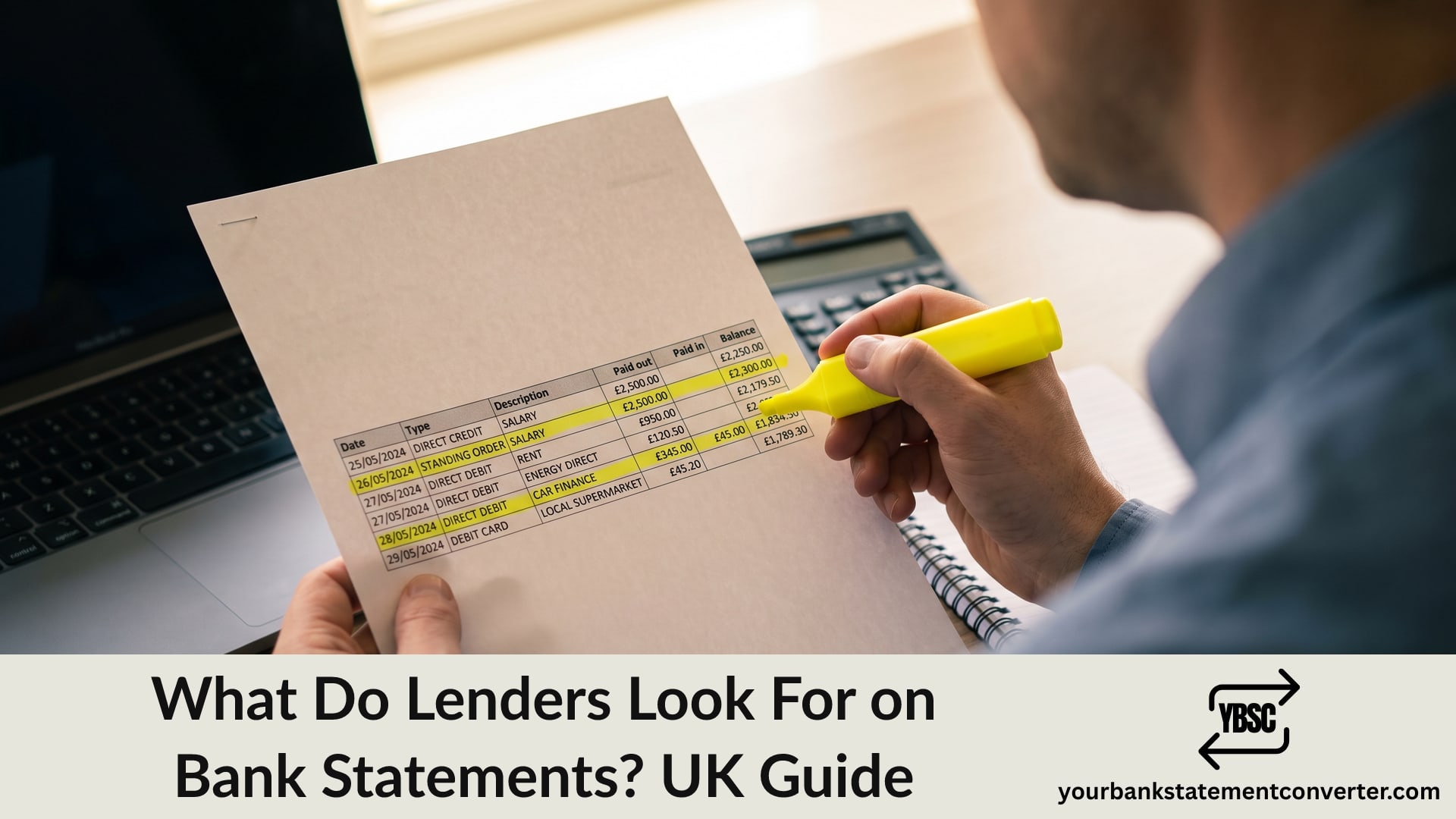
Your Direct Debits and standing orders tell most of this story, which is why the type codes matter. Our guide to statement abbreviations explains how DD and STO entries appear.
The Red Flags That Cause Problems
Some patterns genuinely damage applications. These are the ones assessors are trained to spot.
Gambling transactions. Regular betting outflows are the single most cited problem, particularly where they scale with income or appear just after payday. Occasional small amounts rarely sink an application on their own, but a consistent pattern does.
Undisclosed borrowing. Payments to lenders you did not declare undermine the whole application. Payday loans carry particular weight.
Returned or unpaid Direct Debits. A UNP or returned item suggests you ran out of money, and it signals that more strongly than a low balance does. Our guide to what DR means on a bank statement explains the overdrawn marker assessors watch for.
Unarranged overdraft use. Dipping below zero without an arrangement suggests the budget has no slack.
Regular transfers to unexplained accounts. Large sums moving out need an explanation, because an assessor cannot tell savings from a hidden commitment.
Sudden unexplained deposits. Money appearing shortly before an application raises questions about whether it is really yours to use.
The Balance Trend Nobody Mentions
Here is a check people miss. Assessors read the balance across the whole period, not just the closing figure.
An account that ends each month slightly higher tells a very different story from one that ends at zero every time, even where both close on the same number. A balance that recovers only on payday and drains immediately suggests no buffer at all.
So if you can, apply after a few months of leaving a margin in the account rather than immediately after topping it up.
Getting Your Statements Ready
Prepare properly and you avoid most avoidable rejections.
Provide complete months. Statements must run consecutively with no gaps. A missing period looks like something being hidden.
Send the official PDF. Screenshots and edited files get rejected. Lenders need the bank’s own document, unaltered.
Check what is visible. Read your own statements before sending them, since assessors will. Anything you would need to explain in person is worth explaining in writing first.
Clear small problems early. Cancelling a dormant subscription or settling a small debt three months before applying gives the statements time to reflect it.
Reading three or six months line by line is slow, though. Our bank statement converter turns PDF statements into clean, searchable spreadsheets, so you can total your committed spending, spot recurring payments you had forgotten, and see your own statements the way an assessor will.
Conclusion
To sum up, what lenders look for on bank statements comes down to affordability evidenced three ways: income that arrives consistently from a source they can verify, committed spending they can measure, and a balance trend showing you keep a margin. Gambling, undisclosed borrowing and returned payments cause the most rejections. Read your statements yourself before sending them, since anything that would need explaining is better addressed before an assessor asks.
FAQ
1.What do lenders look for on bank statements?
They check that your declared income actually arrives, measure your committed outgoings, and assess whether you keep a financial buffer. They also look for red flags such as gambling, undisclosed debt and returned payments.
2.How many months of bank statements do lenders want?
Three months is standard for most credit. Six is common for mortgages and for self-employed applicants, because an assessor needs an average rather than a snapshot.
3.Does gambling on a bank statement stop you getting credit?
Not automatically. Occasional small amounts rarely decide an application. A consistent pattern, especially one that scales with income or follows payday, is one of the most cited reasons for rejection.
4.Do lenders see what I actually bought?
No. They see the merchant name, the amount and the date, not an itemised receipt. That is still enough to identify gambling sites, other lenders and subscriptions.
5.Can I edit my bank statements before sending them?
No. Lenders require the bank’s own unaltered PDF, and editing a statement is fraud. Explain anything unusual in writing instead.
6.Will one returned Direct Debit ruin my application?
Rarely on its own. A single returned item with an obvious explanation carries far less weight than a repeated pattern, which suggests the budget has no slack.