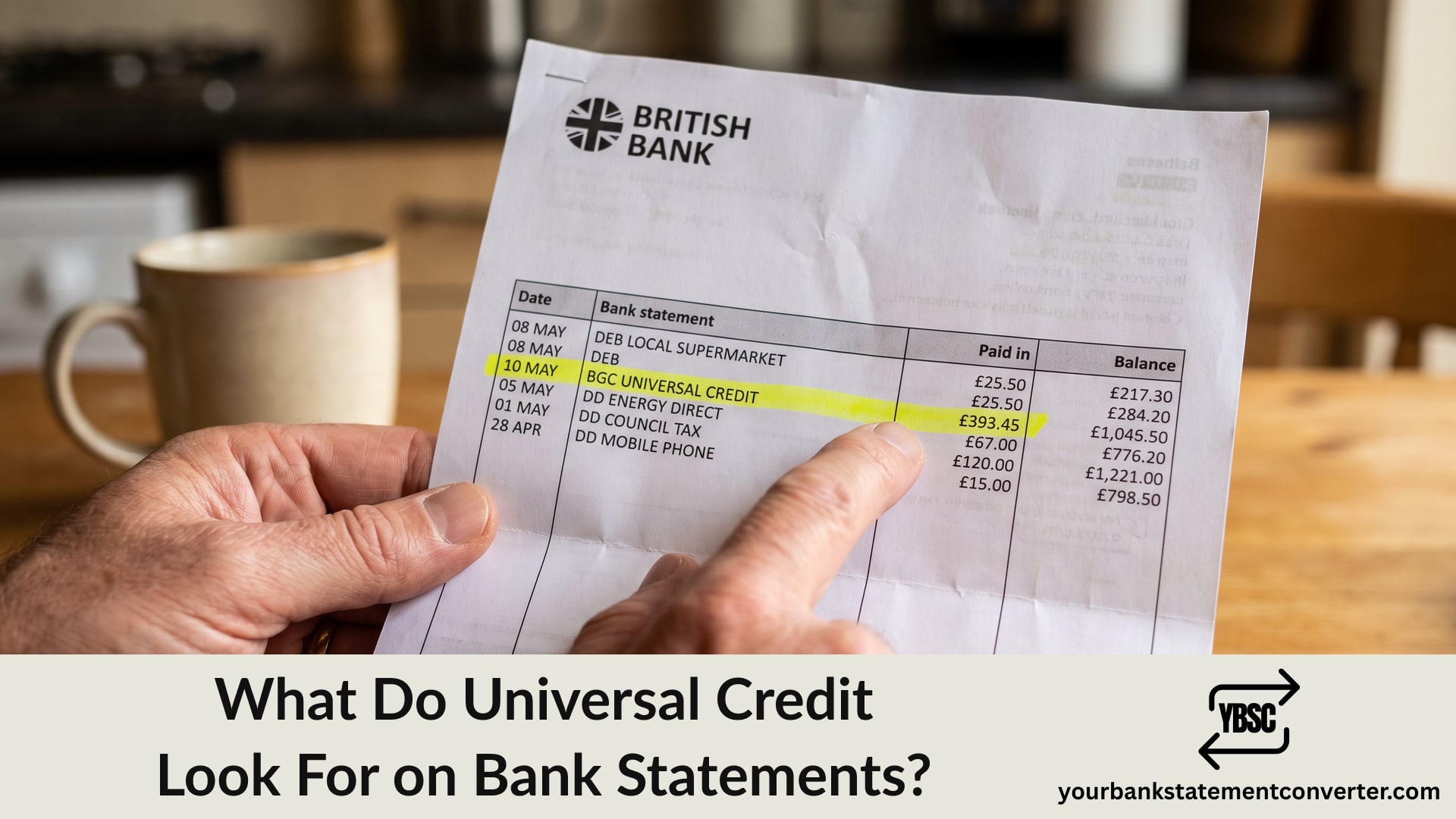
Being asked for bank statements mid-claim is unsettling, especially when nobody explains what happens to them. Knowing what Universal Credit look for on bank statements removes most of that worry, because the checks are narrower than people expect.
This guide covers why the DWP asks, exactly which entries matter, what triggers a request, and how to respond properly.
Key Takeaways
- Universal Credit is means tested, so the DWP checks your capital and income, not your lifestyle.
- Savings above £6,000 reduce your award, and above £16,000 normally ends entitlement.
- They look for undeclared income, including cash deposits and regular transfers in.
- They cannot see what you bought, only the merchant, date and amount.
- Refusing a reasonable request can lead to your claim being suspended.
Why the DWP Asks for Bank Statements
Universal Credit is a means-tested benefit. Your award depends on two things the DWP has to verify: how much money you have, and how much comes in.
Most claims never need statements at all. A request usually follows something specific rather than arriving at random, and the letter or journal message names the period they want.
Importantly, this is a verification exercise rather than a judgement of how you spend. The checks are narrower than the anxiety suggests.
What Universal Credit Look For on Bank Statements
Three things account for nearly every check.
Capital. The total across your accounts, including savings, ISAs and premium bonds. Capital between £6,000 and £16,000 reduces your award on a sliding scale, and above £16,000 it normally ends entitlement altogether. Interest credits marked CR count towards that total.
Income. Money arriving that you have not declared. PAYE reports most earnings automatically, so the focus falls on income that does not report itself: self-employed takings, rent from a lodger, or regular payments from someone else.
Household circumstances. Entries suggesting your situation differs from what you declared. A second person’s income arriving in your account is the common example.
Notably absent from that list is ordinary spending. The DWP is not assessing whether your shopping was sensible.
What They Cannot See
This matters, because worry here is usually misplaced.
A statement shows the merchant name, the date and the amount. It does not itemise purchases. Nobody sees what you put in your trolley, only that you paid a supermarket.
Bank descriptions also record the legal entity rather than the trading name, which is why entries often look unfamiliar even to the account holder. Our guide to statement abbreviations explains why a familiar shop can appear under a name you do not recognise.
What Triggers a Request
Understanding what Universal Credit look for on bank statements also means knowing what prompts a request in the first place.
- A routine review, which happens periodically on longer claims
- A reported change, such as moving home or a change in work
- Information from another source that does not match your claim
- A capital question, where something suggests savings above the threshold
- A fraud referral, which can include anonymous reports
Most requests are routine. Receiving one does not mean you are suspected of anything.
How to Respond to a Request
Handle it straightforwardly and it usually resolves quickly.
Send complete statements. Provide every page for the period requested, including pages that look empty. Gaps invite further questions.
Do not edit anything. Redacting or altering a statement causes far more problems than whatever you wanted to hide. Send the bank’s own document.
Include every account. Capital is assessed across all your accounts, so omitting one is the mistake that causes real trouble.
Explain unusual entries upfront. A large one-off deposit with an obvious explanation, such as a tax refund or money held for someone else, is worth a short note in your journal.
Meet the deadline. The DWP can suspend a claim where a reasonable request goes unanswered.
If money in your account genuinely belongs to somebody else, say so immediately and evidence it. That situation is not unusual, but it needs explaining rather than hoping it passes unnoticed.
Checking Your Own Statements First
Before sending anything, it helps to read your statements the way an assessor will. Totalling deposits across several months, or spotting a regular credit you had forgotten, is slow work in a banking app.
Our bank statement converter turns PDF statements into clean, searchable spreadsheets. Sort by amount to find the largest credits, filter the description column to group recurring payments, and check your own position before a question arrives.
Conclusion
To sum up, what Universal Credit look for on bank statements is narrow: your capital against the £6,000 and £16,000 thresholds, income you have not declared, and anything suggesting your household circumstances differ from your claim. They see merchants, dates and amounts, never itemised purchases. Send complete unedited statements for every account, explain anything unusual in your journal, and answer within the deadline.
FAQ
1.What do Universal Credit look for on bank statements?
They check your capital across all accounts, look for income you have not declared, and watch for entries suggesting your household circumstances differ from your claim. Ordinary spending is not assessed.
2.How much savings can I have on Universal Credit?
Capital below £6,000 does not affect your award. Between £6,000 and £16,000 it reduces the award on a sliding scale. Above £16,000 normally ends entitlement.
3.Can Universal Credit see what I bought?
No. A statement shows the merchant name, date and amount, not an itemised list. They can see you paid a shop, not what you bought there.
4.How far back can Universal Credit check my bank statements?
The request states the period, commonly three to six months. Longer periods can be requested where there is a specific reason, such as a capital query.
5.What happens if I refuse to provide bank statements?
The DWP can suspend your claim and stop payments. If you have genuine difficulty obtaining them, explain that through your journal rather than ignoring the request.
6.Do I have to declare money held for someone else?
Yes, and you should explain it immediately with evidence. Money sitting in your account counts as your capital unless you can show it belongs to somebody else.