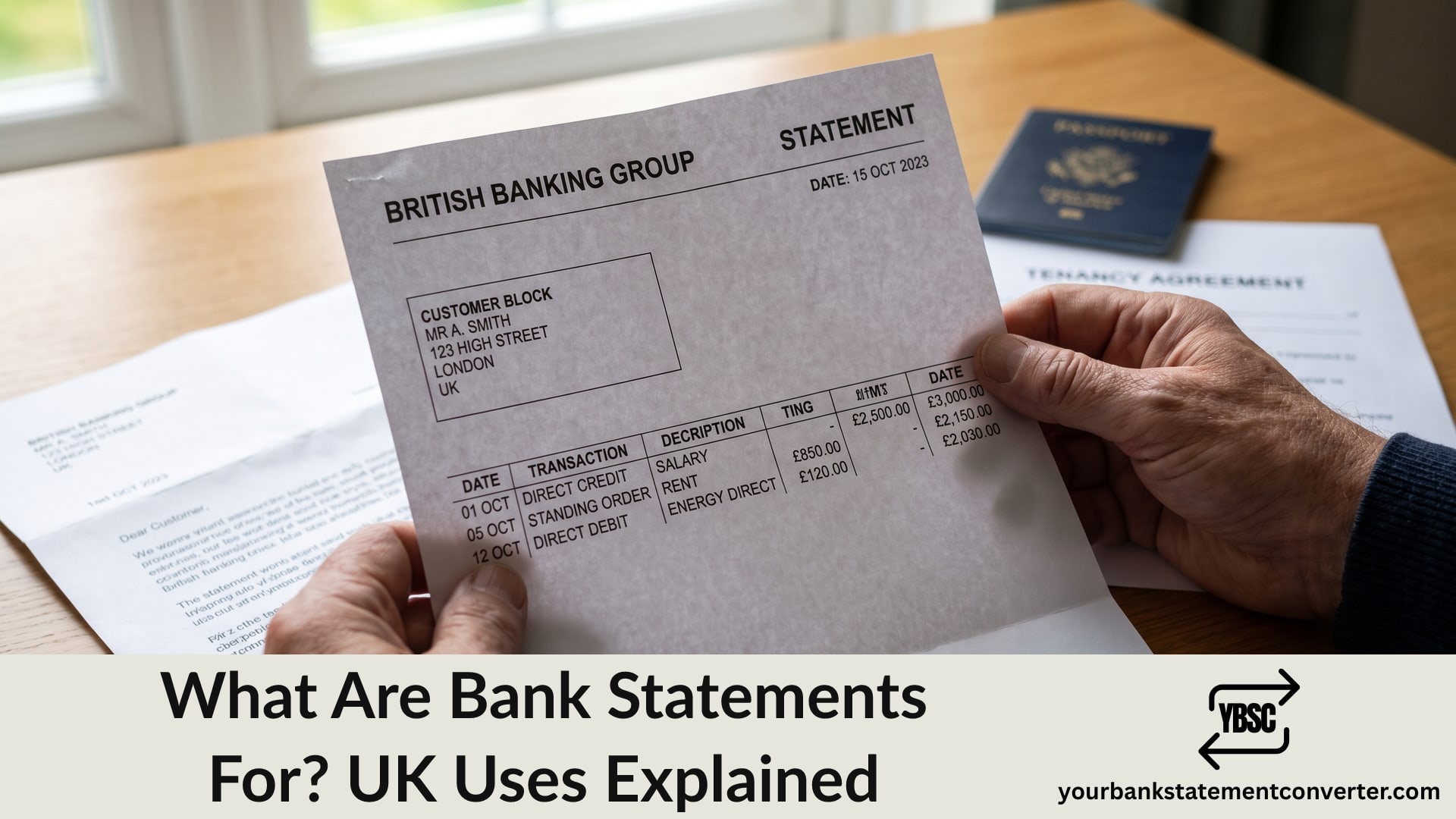
Most people only open a statement when something looks wrong, which undersells the document considerably. So what are bank statements for? They double as proof of identity, income and address across a surprising number of situations.
This guide covers every practical use, who accepts them as evidence, and how long to hold onto them.
Key Takeaways
- Statements act as proof of address, income and identity across the UK.
- Lenders, landlords and the DWP all use them to verify what you have declared.
- They provide the evidence trail for tax returns and business accounts.
- They are how you spot errors and fraud on your own account.
- Retention periods run from two years to six, depending on your circumstances.
The Everyday Purpose: Checking Your Own Money
Start with the use that has nothing to do with anybody else.
A statement is the authoritative record of what left and entered your account. Your banking app shows recent activity; the statement is the formal document, complete with period, balances and running total.
That makes it the place to:
- Spot unfamiliar charges before they repeat
- Find subscriptions you forgot you had
- Check a payment arrived, or that a refund landed
- Catch bank errors, including duplicated payments and wrong charges
Small recurring charges are the ones people miss, because each is individually forgettable. Reading a full statement rather than an app feed is how they surface.
Proving Where You Live
Statements rank among the most widely accepted proofs of address in the UK, since they carry your name and address issued by a regulated institution.
You will be asked for one when:
- Renting a property, alongside referencing checks
- Opening an account with another bank or provider
- Registering with a GP or a service
- Applying for a driving licence or passport
- Signing up for utilities or broadband
Most organisations want one issued within the last three months. Download a recent PDF rather than digging out an old paper copy. Our guide to whether a bank statement is proof of address covers the details.
Proving What You Earn
This is where statements do their heaviest work, and where people underestimate how closely they are read.
Mortgage applications need three to six months, covering every account you use. Our guides to what lenders look for and what statements are needed for a mortgage set out the requirements.
Rental applications use them to confirm you can afford the rent.
Loans and credit rely on them to assess affordability.
Benefit claims, including Universal Credit, use them to verify capital and undeclared income.
Visa applications frequently require them to demonstrate you can support yourself.
In each case the reader is verifying that what you declared matches what actually happened.
Tax, Accounting and Business Records
For anyone self-employed or running a company, statements are the underlying evidence for everything else.
They support your Self Assessment return, evidence business expenses, and provide the figures for VAT returns. An accountant also reconciles them against your books, which our guide to what a bank reconciliation statement is explains.
During an HMRC enquiry they become the primary record, which is precisely why retention periods matter.
Legal and Personal Situations
A few less obvious uses, all of which arrive unexpectedly.
- Divorce proceedings, where financial disclosure is required
- Probate, to establish what an estate contains
- Insurance claims, evidencing a purchase or a loss
- Disputes with a retailer, proving a payment was made
- Court proceedings, as evidence of income or spending
In all of these the statement must be complete and unaltered, and our guide to what a redacted bank statement means explains when editing is and is not allowed.
How Long to Keep Them
Retention depends on which of the above applies to you.
- Around two years for most employed people
- At least 22 months after the tax year if you file Self Assessment
- At least six years if you are self-employed or run a business
- Indefinitely for anything evidencing a house deposit or a legal matter
Our guide to what to do with old bank statements covers safe disposal, which matters because a statement carries enough detail for identity fraud.
Making Statements Usable
A PDF cannot be searched or totalled, which is exactly what most of these uses require.
Our bank statement converter turns PDF statements into clean, searchable spreadsheets. Total your income for a mortgage application, sum business expenses for a tax return, or filter for one merchant across a year, all without reading page by page. If you are working through more than a handful of pages, the pricing plans are measured in pages rather than users.
Conclusion
To sum up, asking what are bank statements for produces a longer list than most people expect. They prove your address, evidence your income for mortgages, rentals and benefits, support tax returns and business accounts, and serve as evidence in legal matters. They are also how you catch errors and forgotten subscriptions on your own account. Keep them for two to six years depending on your circumstances, and destroy old ones securely rather than binning them.
FAQ
1.What are bank statements for?
They record what entered and left your account, and serve as proof of address, income and identity for mortgages, rentals, benefit claims, tax returns and legal matters.
2.Can I use a bank statement as proof of address?
Usually yes. Because it shows your name and address issued by a regulated institution, most organisations accept a recent statement, typically one issued within the last three months.
3.Why do lenders want bank statements?
To verify that your declared income actually arrives and to measure your committed outgoings. They also check for red flags such as gambling, undisclosed borrowing and returned payments.
4.Do I need bank statements for my tax return?
They are not submitted with the return, but they are the underlying evidence for the figures. HMRC can request them during an enquiry, which is why records must be kept.
5.How long should I keep bank statements?
Around two years for most employed people, at least 22 months after the tax year for Self Assessment, and at least six years if self-employed or running a business.
6.Is a banking app screenshot the same as a statement?
No. Screenshots lack the header, statement period and balances, so lenders, landlords and government bodies reject them. Download the official PDF instead.