Two balances that should match rarely do, and the document explaining the gap has a name. A bank reconciliation statement is that explanation, set out formally enough that an accountant, an auditor or a lender can follow it.
This guide defines the document, shows what belongs on one, and explains how it differs from the act of reconciling, which is a related but separate thing.
Key Takeaways
- A bank reconciliation statement is a document, not a process. It records a result.
- It explains the difference between your cash book balance and your bank statement balance.
- The gap comes from timing differences and errors, not usually from anything sinister.
- Four items appear on almost every one: unpresented cheques, outstanding lodgements, bank charges and direct credits.
- Businesses produce one monthly, and auditors expect to see them.
What Is a Bank Reconciliation Statement?
A bank reconciliation statement is a short formal document that reconciles two figures:
- The balance in your own records, usually called the cash book
- The balance on your bank statement at the same date
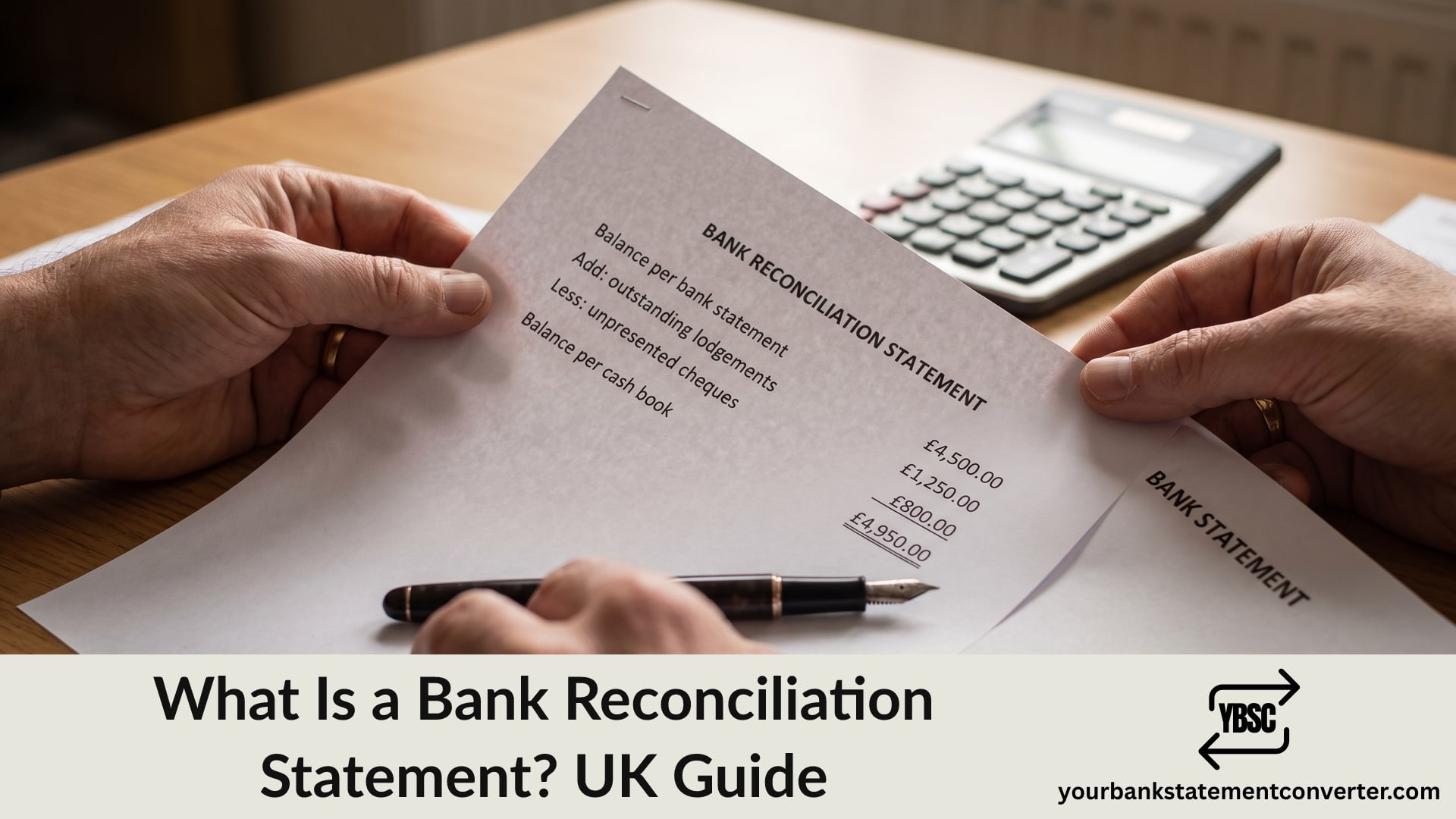
Those two figures rarely agree on any given day. The statement lists every item causing the difference, then shows the two balances agreeing once those items are accounted for.
Crucially, it is the output. Reconciling is the work of finding the differences, and our guide to reconciling a bank statement walks through that process step by step. The statement is what you produce at the end of it.
Why the Two Balances Differ
Almost every difference comes down to timing. You record a transaction when it happens; your bank records it when it clears.
Unpresented cheques. You wrote and recorded a cheque, but the recipient has not banked it yet. Your books show the money gone, your bank does not.
Outstanding lodgements. You paid money in and recorded it, but the bank has not credited it yet. The reverse situation.
Bank charges and interest. The bank applied them without telling you first, so they appear on the statement before they reach your books.
Direct credits and debits. Standing orders, Direct Debits and payments in from customers can hit the bank before you record them.
Errors. Less common but real, on either side. A transposed figure in your books or a bank error both show up here.
Understanding the type codes helps you spot these quickly, and our guide to statement abbreviations covers what DD, STO and BGC entries mean.
What Goes on the Document
The layout is conventional, which is why auditors like it. Most follow this shape:
- Start with the balance per the bank statement
- Add outstanding lodgements not yet credited
- Deduct unpresented cheques not yet cleared
- Adjust for any bank errors
- Arrive at the balance per the cash book
Some accountants run it the other way, starting from the cash book and working towards the bank figure. Both are acceptable, and the choice usually follows house convention.
The document should carry a date, since it reconciles two balances at one specific point. A reconciliation without a date is meaningless.
Why It Matters
Three reasons, and only the first is obvious.
It catches errors early. A transaction recorded twice, or at the wrong amount, surfaces during reconciliation rather than at year end.
It detects fraud. Unauthorised payments show on the bank statement but not in your books. Regular reconciliation is one of the simplest internal controls a small business has.
It supports your accounts. Auditors and lenders expect to see reconciliations. A set of accounts backed by monthly reconciliations carries far more weight than one without.
For most businesses, monthly is the right rhythm. Higher transaction volumes justify weekly.
Making the Work Faster
The tedious part is matching hundreds of lines between a PDF statement and your accounting records, which is exactly the work that produces the document.
Our bank statement converter turns PDF statements into clean spreadsheets, so you can sort by amount or date and match against your ledger in a fraction of the time. The items that will not match are the ones that belong on your reconciliation statement. If you are working through more than a handful of pages, the pricing plans are measured in pages rather than users.
Conclusion
To sum up, a bank reconciliation statement is the document that explains why your cash book balance and your bank statement balance differ at a given date. It lists the timing differences and errors causing the gap, then shows both figures agreeing once those are accounted for. Unpresented cheques, outstanding lodgements, bank charges and direct credits appear on nearly every one. Produce one monthly, date it, and keep it, because auditors and lenders will expect to see it.
FAQ
1.What is a bank reconciliation statement?
It is a document reconciling the balance in your own records with the balance on your bank statement at the same date, listing every item that explains the difference between them.
2.What is the difference between reconciling and a reconciliation statement?
Reconciling is the process of finding the differences. The reconciliation statement is the document you produce recording what you found and showing the two balances agreeing.
3.What items appear on a bank reconciliation statement?
Most commonly unpresented cheques, outstanding lodgements, bank charges and interest, direct credits and debits not yet recorded, and any errors on either side.
4.How often should a business reconcile its bank account?
Monthly suits most businesses. Higher transaction volumes justify weekly, and reconciling more often makes errors easier to trace while the detail is fresh.
5.Why do my cash book and bank statement never match?
Because you record transactions when they happen and your bank records them when they clear. That timing gap explains most differences, with errors accounting for the rest.
6.Do sole traders need a bank reconciliation statement?
It is not legally required, but it is strongly advisable. It catches errors, supports your Self Assessment figures, and gives you confidence the records you file are accurate.