You’re checking through recent transactions and spot “TGTG” with an amount you don’t immediately recognise. No store name, no obvious context, just four letters.
Key Takeaways
- TGTG stands for Too Good To Go, an app that lets cafes, restaurants, and shops sell surplus food at a discount.
- This usually means a payment attempt failed and your bank placed a temporary authorisation hold.
- Too Good To Go is a well-established food-waste reduction app used widely across the UK and other countries.
- Open the app, go to Profile, then My Orders, and compare the Order ID there with the reference on your bank statement.
- This is usually one completed charge and one pending hold from a failed attempt.
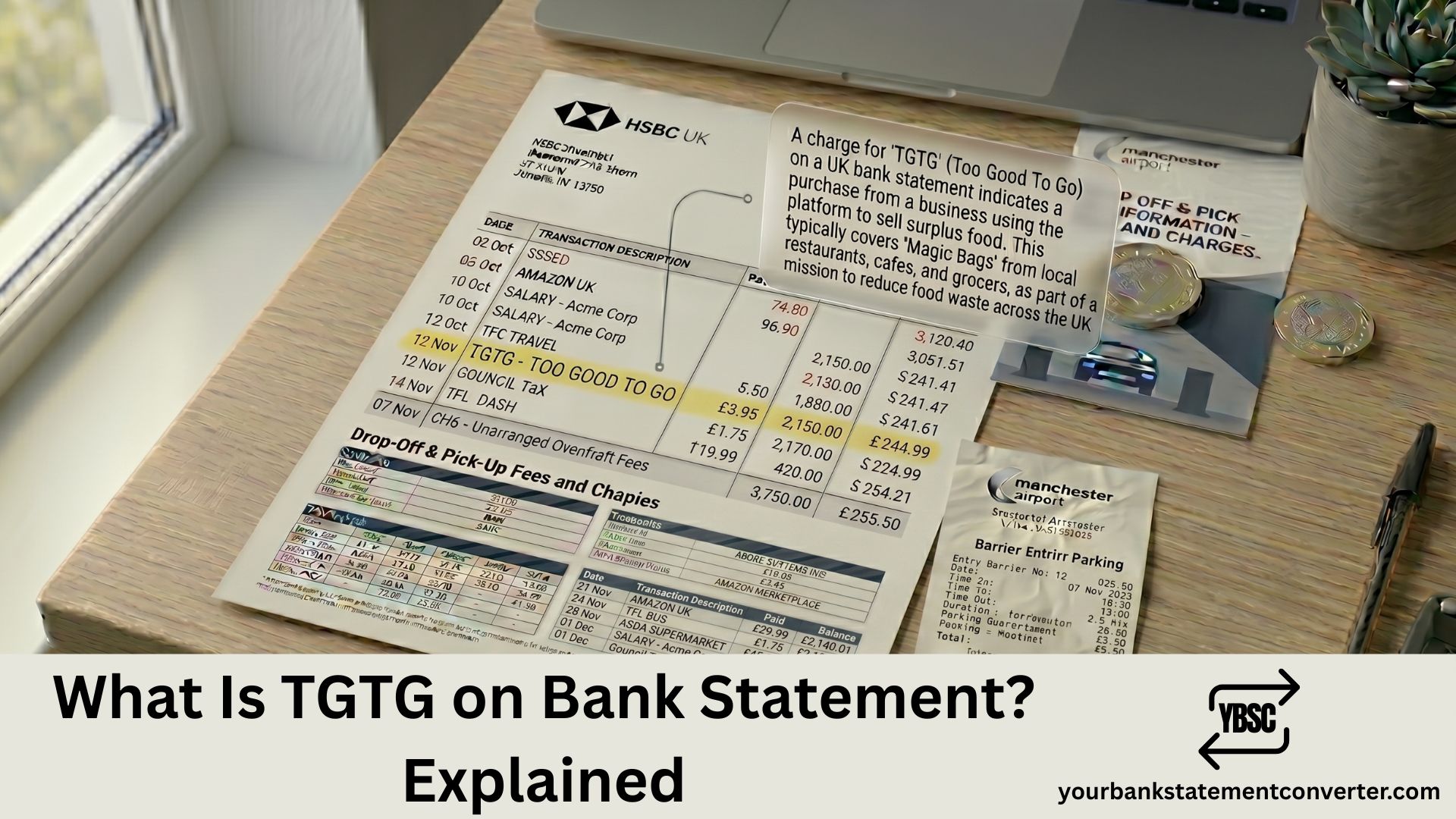
Here’s the direct answer: TGTG stands for Too Good To Go, the food-waste reduction app that lets cafes, restaurants, and shops sell surplus food at a reduced price through “Magic Bags.” If you’ve ever browsed or ordered through the app, even if the order didn’t go through, that’s almost certainly where this charge came from.
This is the most common explanation by far. But there’s an important detail below about why a TGTG charge can appear even when no order was actually completed.
Why Does TGTG Show Up Instead of the Shop or Cafe Name?
Too Good To Go processes payments through its own app rather than through each individual restaurant or shop. So instead of seeing the name of the cafe or bakery you ordered from, your statement shows the payment processor’s name: TGTG or Too Good To Go.
This is normal and matches how most app-based food ordering services work. The store name you collected your order from won’t usually appear on your bank statement at all.
Why Did I Get a TGTG Charge When I Don’t Have an Order in the App?
This is the part that catches most people out, and it has a specific explanation.
A charge on your statement does not always mean an order was successful. When you attempt to buy a Magic Bag, your bank places a temporary authorisation hold to confirm the funds are available. If that payment then fails for any reason, the order will not appear in your Too Good To Go account, but the hold can still show up on your statement as a pending charge.
In this case, Too Good To Go never actually receives the money. The hold is released automatically by your bank, usually within a few days.
How Do I Check If a TGTG Charge Is Legitimate?
Follow these steps in order:
- Open the Too Good To Go app and go to Profile, then My Orders. Every completed order has a unique Order ID.
- Compare that Order ID against the reference on your bank statement. If there’s a match, the charge is a genuine, completed order.
- If there’s no matching order, it’s likely a pending authorisation hold from a failed payment attempt. This should clear on its own within a few business days.
- If you see two charges for what should have been one order, check both against your order history the same way. Usually only one is a real charge, and the other is a pending hold waiting to drop off.
- Check if a friend or family member with access to your phone or card details placed an order. This accounts for a fair share of unrecognised TGTG charges.
What If the TGTG Charge Doesn’t Disappear?
If a pending hold hasn’t cleared within around five business days, that’s no longer something Too Good To Go can resolve on their end, since they don’t hold or control the funds directly once a payment fails. At that point, contact your bank directly. They can confirm the hold and release it manually if needed.
Is TGTG a Legitimate Charge, or Could It Be Fraud?
Too Good To Go is a legitimate, well-known food-waste app used widely across the UK. A TGTG charge is not inherently suspicious. That said, if you’ve never used the app, don’t recognise the device or account it might be linked to, and the charge doesn’t match any pending hold pattern, it’s worth treating it the same as any other unrecognised transaction and verifying with your bank.
Conclusion
TGTG on a UK bank statement refers to Too Good To Go, the app used to buy discounted surplus food from local cafes, restaurants, and shops. The charge appears under the app’s name rather than the store you ordered from, and in some cases it can show up even when an order failed, as a temporary hold that clears on its own. Check your Order ID against the app first, and only contact your bank if the charge hasn’t resolved after a few days.
If you regularly review your statement for charges like this, a tool that organises your transactions clearly makes it much easier to track down. Our bank statement converter turns PDF statements into clean, searchable spreadsheets, so spotting and matching entries like TGTG against your order history takes seconds instead of scrolling through pages of transactions. If this is work you repeat, the pricing page sets out the per-page tiers.
FAQ
If other lines on the page are just as puzzling, our guide to statement abbreviations covers the common UK codes, while what is on a bank statement walks through the document section by section.
1.What does TGTG mean on a bank statement?
TGTG stands for Too Good To Go, an app that lets cafes, restaurants, and shops sell surplus food at a discount. A charge from TGTG means a payment was attempted or completed through the app.
2.Why is there a TGTG charge but no order in my account?
This usually means a payment attempt failed and your bank placed a temporary authorisation hold. The order won’t appear in the app, and the hold should release automatically within a few days.
3.Is Too Good To Go a legitimate company?
Yes. Too Good To Go is a well-established food-waste reduction app used widely across the UK and other countries.
4.How do I check if a TGTG charge is real?
Open the app, go to Profile, then My Orders, and compare the Order ID there with the reference on your bank statement. A match confirms a genuine completed order.
5.Why was I charged twice for one TGTG order?
This is usually one completed charge and one pending hold from a failed attempt. Only one should remain after a few days; the other clears automatically.
6.What should I do if a TGTG hold won’t go away?
If a pending charge hasn’t cleared after about five business days, contact your bank directly, since they control the release of the hold once a payment has failed.