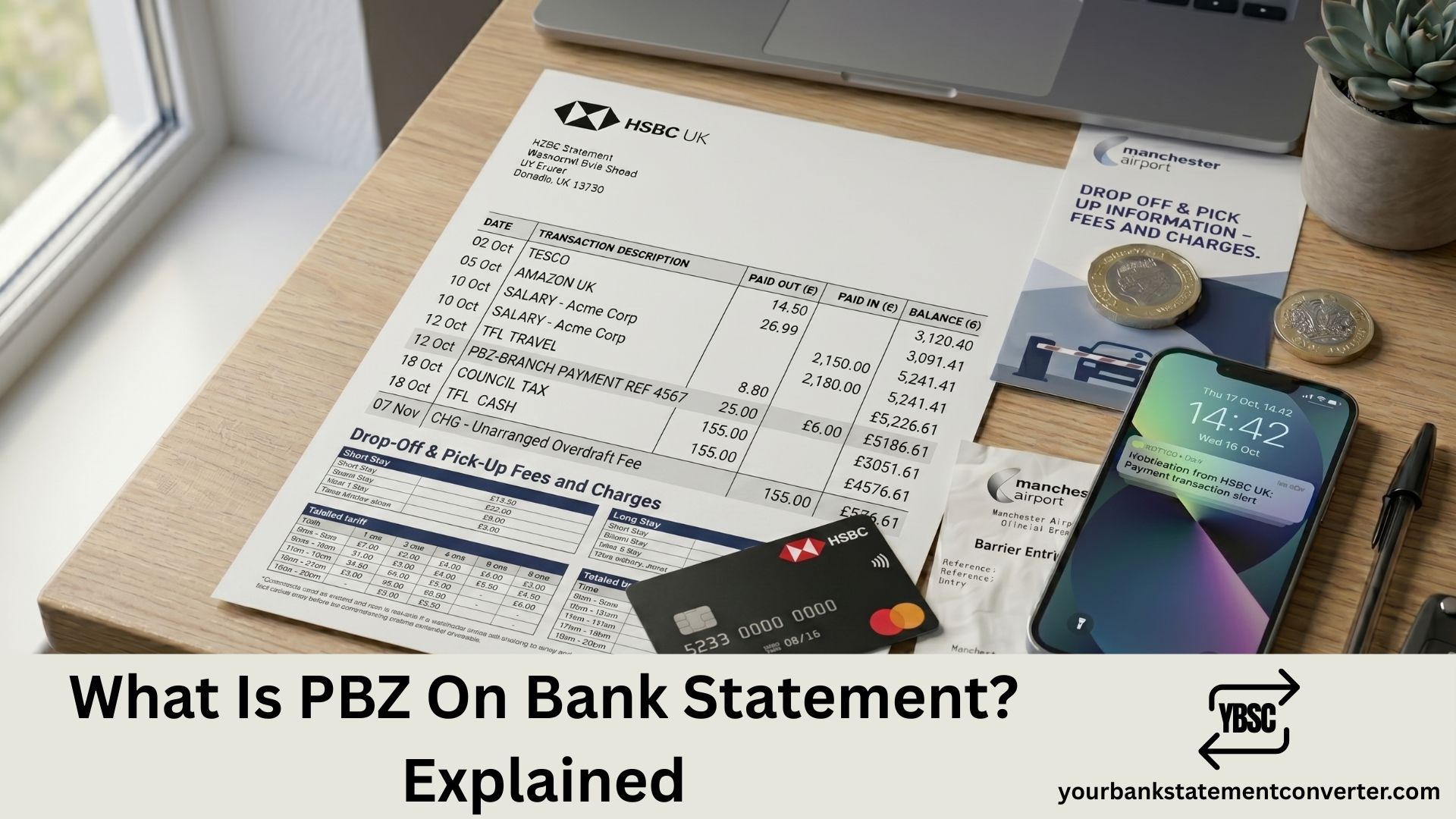
PBZ on your bank statement is a Premium Bonds prize payment from NS&I, National Savings and Investments. It usually appears as “PBZ” or “NS PBZ,” followed by a string of numbers, and it means money has been credited into your account after winning a prize in NS&I’s monthly Premium Bonds draw. It is a legitimate, welcome credit, not a charge, fee, or anything to be concerned about.
What Does PBZ Stand For?
“NS” stands for National Savings, and “PBZ” is the internal reference NS&I uses for Premium Bonds prize payments. Banks often shorten payment descriptions to fit their own statement systems, which is why you see a short code rather than the full wording “National Savings and Investments Premium Bonds Prize.” The “Z” at the end doesn’t carry any separate meaning of its own, it’s simply part of NS&I’s internal naming convention.
Why Does PBZ Appear On Your Statement?
A PBZ entry shows up when all of the following apply:
- You hold Premium Bonds, a UK savings product where, instead of earning regular interest, each bond number is entered into a monthly prize draw.
- One or more of your bond numbers was selected as a winner in that month’s draw, run using NS&I’s random number generator, known as ERNIE.
- You’ve chosen to have prize winnings paid directly into your bank account, rather than automatically reinvested into more bonds.
Once these conditions are met, NS&I processes the payment, and it lands in your account as a PBZ or NS PBZ credit, usually within a few days of the draw results being released.
Is PBZ Always A Premium Bonds Prize?
In the overwhelming majority of UK cases, yes. PBZ is specifically tied to NS&I’s Premium Bonds prize processing, and NS&I is a government-backed savings organisation, so this isn’t an obscure or unreliable source of payment. If you genuinely don’t hold Premium Bonds and have never bought, inherited, or been gifted any, a PBZ credit would be unusual and worth double-checking with your bank, though this is rare given how tightly the reference is linked to NS&I’s own systems.
Why People Often Don’t Recognise It At First
Many Premium Bonds holders bought their bonds years ago, or received them as a gift from a parent or grandparent, and may not actively track NS&I notifications. Since the payment reference doesn’t spell out “Premium Bonds” in full, and prizes can be as small as £25, it’s easy to forget you hold any bonds at all until a PBZ credit unexpectedly appears. This is a well-documented source of confusion, with people occasionally mistaking it for a scam or an unidentified bank transfer before realising what it actually is.
How To Confirm A PBZ Payment Is Genuine
- Check whether you hold Premium Bonds. If you, a parent, or a relative bought Premium Bonds in your name at any point, this is almost certainly the source.
- Log into your NS&I account or the NS&I app. Your prize history will show exactly which bond number won, the amount, and the date, letting you match it directly against the PBZ entry on your statement.
- Check for an email or letter from NS&I. NS&I typically notifies winners around the time of the monthly draw, so a notification from the same period is a strong confirming signal.
- Compare the amount. Premium Bonds prizes range from £25 up to £1 million, so the amount itself won’t immediately confirm anything, but it should match exactly what’s shown in your NS&I prize history.
What If You Don’t Hold Premium Bonds?
If you’re confident you have no Premium Bonds in your name and still see a PBZ credit, treat it as you would any unrecognised payment into your account. Contact your bank to flag it rather than spending the funds, since it could in rare cases reflect a misdirected payment that may later need to be returned.
Final Thoughts
PBZ on your bank statement is, in almost every UK case, simply NS&I crediting you with a Premium Bonds prize, a genuine win rather than anything suspicious. The short, unclear code is just how NS&I’s payment reference gets shortened by banking systems, not a sign of a scam or an error. If you’d like an easier way to track Premium Bonds prizes and other credits alongside your regular transactions, a bank statement converter can turn your PDF statements into organised, searchable spreadsheets, making entries like PBZ simple to spot and confirm against your NS&I prize history.
FAQ
1.What does PBZ mean on a bank statement?
It stands for a Premium Bonds prize payment from NS&I, National Savings and Investments, typically shown as “PBZ” or “NS PBZ.”
2.Is PBZ a charge or a credit?
It’s a credit. PBZ means money has been paid into your account, not taken out.
3.Why did I get a PBZ payment if I don’t remember buying Premium Bonds?
You may hold bonds bought or gifted to you some time ago. Check your NS&I account, since prizes can appear even from older or forgotten holdings.
4.How do I check if a PBZ payment is real?
Log into your NS&I account or app and check your prize history, which will show the winning bond number, amount, and date to match against your statement.
5.Can PBZ appear if I’ve reached my Premium Bonds holding limit?
Yes. If you’ve reached the maximum holding limit, further prizes can’t be reinvested and are instead paid out as a PBZ credit to your bank account.
6.Is a PBZ entry ever fraudulent?
It’s extremely rare, since PBZ is a legitimate NS&I reference. If you have no Premium Bonds at all and still see one, contact your bank to double-check rather than assuming it’s a mistake in your favour.