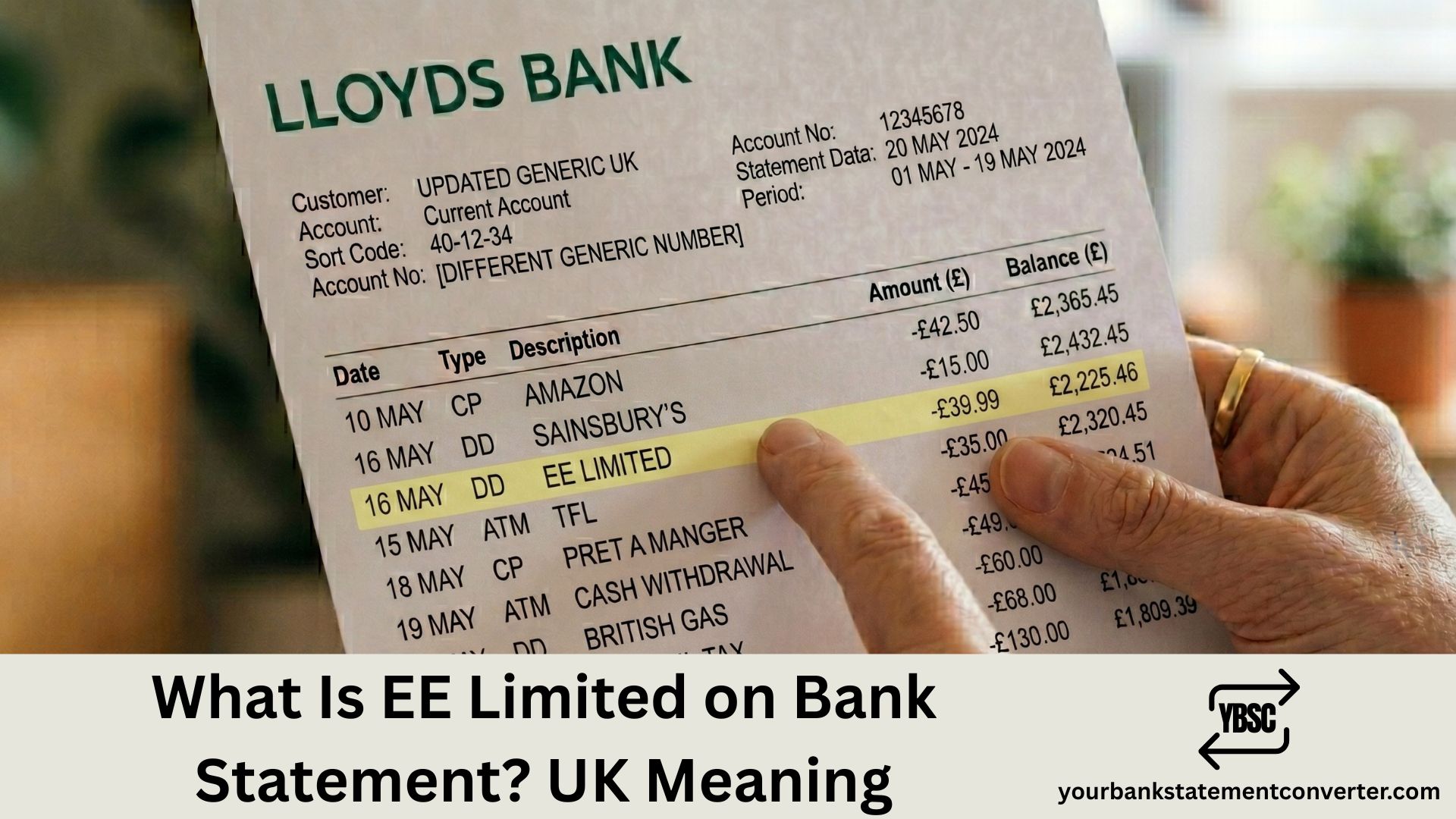
You’re checking your statement and see “EE Limited” with a Direct Debit or card payment attached. Maybe you know EE as a mobile network, maybe you don’t use them at all, and either way the entry isn’t immediately clear.
Key Takeaways
- EE Limited is the official registered company name of EE, the UK mobile and broadband network owned by BT Group.
- This usually happens on a Flex Pay contract, where the cost of your phone and the cost of your airtime plan are billed as two separate Direct Debits rather than one combined payment.
- EE Limited is simply EE’s full legal company name as registered with Companies House, not a separate or unrelated business.
- Call EE directly first to check whether any account, current or past, is linked to your details.
- In documented cases, customers have found charges continuing for accounts that don’t appear under their current login.
Here’s the direct answer: EE Limited is the official registered company name behind EE, the UK mobile and broadband network owned by BT Group. If you have a mobile phone contract, SIM-only plan, mobile broadband, or home broadband with EE, this is simply your monthly bill being collected. The “Limited” in the name is just EE’s full legal company name as registered with Companies House, rather than a separate or unrelated business.
That’s the explanation for the vast majority of people who see this entry. But there are a couple of specific situations worth understanding, especially if you see two EE entries in the same month, or one when you don’t think you have an EE account at all.
Why Does My Statement Say “EE Limited” Instead of Just “EE”?
Companies often appear on bank statements under their full registered legal name rather than their everyday brand name. EE Limited is the company’s official name as recorded with Companies House, and it’s been operating under that registration since 1989, well before the EE brand itself launched. So even though you know the brand as simply “EE,” your statement is showing the legal entity collecting the payment.
Why Do I Have Two Separate EE Charges in the Same Month?
This is a common and recognised situation, particularly for customers on a Flex Pay contract. If you took out a phone on a Flex Pay plan, EE splits the cost of the device and the cost of your monthly tariff into two separate charges, each collected as its own Direct Debit. So instead of one combined bill, you may see:
- One entry for “EE Limited” covering your tariff
- A second, separate entry (sometimes shown slightly differently, such as “EE Ltd”) covering your device repayments
Both are legitimate parts of the same overall contract. If you weren’t expecting two separate charges, it’s worth checking whether your plan includes a financed device alongside your airtime plan.
What If I Don’t Have an EE Account at All?
This is where it’s worth pausing and checking more carefully. Some customers have reported EE-labelled charges appearing on their statement despite having no current EE mobile or broadband account, and despite EE’s own customer service being unable to trace the payment to anything on their account when contacted.
If this matches your situation:
- Call EE directly first. Use 150 from an EE mobile or 0800 956 6000 from any other phone, and ask them to check whether there’s any account, past or present, linked to your name or payment details.
- Ask specifically whether it relates to broadband, not just mobile. Some reported cases involved a broadband account the customer didn’t recognise, separate from any mobile contract.
- If EE can’t trace the payment to any account of yours, treat it as you would any unrecognised transaction. Contact your bank or card provider and ask them to investigate and, if appropriate, block further payments.
- Don’t assume the card needs to be cancelled outright without checking with your bank first, since in some cases a Continuous Payment Authority can survive even after a card is replaced.
Could This Be a Cancelled Service That’s Still Charging?
Yes, this is another documented pattern. Some customers have found a Direct Debit continuing to collect payments for a broadband or mobile service that doesn’t show up under their current account when they check online, even though EE confirms a service was active under their details at some point. If your statement reference includes a code you don’t recognise alongside “EE,” note down the full reference exactly as shown and quote it when you call, since this can help EE’s billing team trace which specific account or contract it relates to.
Conclusion
EE Limited on a UK bank statement almost always refers to a genuine mobile or broadband bill from EE, shown under the company’s full registered legal name. Two separate EE charges in the same month usually point to a Flex Pay contract, where the device and tariff are billed separately. If you don’t recognise the charge at all, or EE can’t trace it to an account of yours, treat it as an unrecognised transaction and involve your bank rather than assuming it will resolve itself.
If you want to check exactly how your EE payments have changed over time, or confirm whether you’re being charged once or twice a month, going through statements manually is tedious. Our bank statement converter turns PDF statements into clean, searchable spreadsheets, so you can quickly trace every EE entry, its reference, and its amount in one place.
FAQ
Unfamiliar entries are rarely a sign of anything wrong. Our guide to what the abbreviations on a bank statement mean decodes the type codes, and what is on a bank statement explains how each section of the page fits together.
1.What does EE Limited mean on a bank statement?
EE Limited is the official registered company name of EE, the UK mobile and broadband network owned by BT Group. A charge from EE Limited is normally a genuine mobile or broadband bill.
2.Why do I have two EE charges in the same month?
This usually happens on a Flex Pay contract, where the cost of your phone and the cost of your airtime plan are billed as two separate Direct Debits rather than one combined payment.
3.Is EE Limited the same company as EE?
Yes. EE Limited is simply EE’s full legal company name as registered with Companies House, not a separate or unrelated business.
4.What if I see an EE Limited charge but don’t have an EE account?
Call EE directly first to check whether any account, current or past, is linked to your details. If they can’t trace it, contact your bank or card provider and treat it as an unrecognised transaction.
5.Can a Direct Debit from EE continue after I cancel my contract?
In documented cases, customers have found charges continuing for accounts that don’t appear under their current login. If this happens, give EE the exact statement reference so their billing team can trace the specific account involved.
6.Who do I contact if I think an EE charge is fraudulent?
Contact your bank or card provider to dispute the payment and request an investigation, in addition to contacting EE directly to confirm whether the charge is linked to any account of yours.