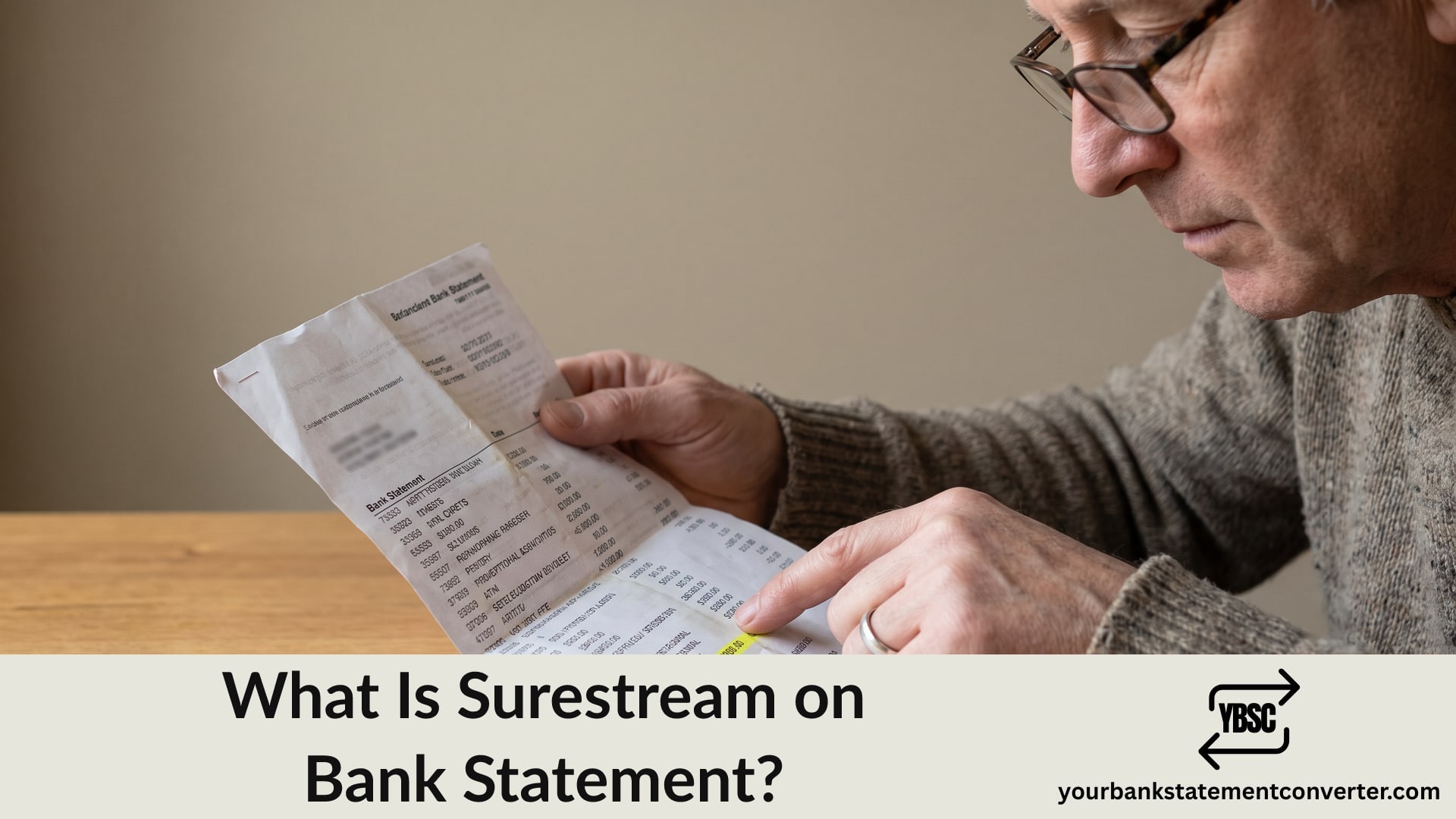
A name ending in “stream” suggests a video subscription, which is exactly the assumption that sends people looking in the wrong place. Surestream on a bank statement has no documented UK consumer service behind it, so identifying it means working from the payment rather than the word.
This guide explains what the name does and does not tell you, why a streaming assumption misleads, and the steps that identify a recurring charge whatever it turns out to be.
Key Takeaways
- No UK consumer service publishes anything linking this name to statement entries.
- The closest matches are a US internet provider and unrelated media businesses.
- A name containing “stream” does not mean a video subscription.
- Small recurring amounts are the pattern most worth checking promptly.
- Your bank holds the full merchant record, which is the reliable route.
What the Name Does Not Tell You
Worth dealing with first, because the assumption is so natural.
“Stream” appears in company names across telecoms, media production, broadcast technology, data services and internet provision. Plenty of businesses using it have nothing to do with consumer video.
The closest documented matches are a US-based internet service provider and unrelated media technology firms. Neither publishes anything about UK consumer entries, so neither explains a Surestream on bank statement charge.
That leaves the name as a dead end. What follows is the route that works instead.
Why This Guide Will Not Invent an Answer
Searching this term returns confident definitions with nothing behind them.
Pages like that fill a gap rather than inform, and they contradict each other. Another guess would add noise rather than help. Here is the honest position: no authoritative source explains what a Surestream on bank statement entry relates to.
That is not a dead end in practice. Your own account holds the answer, and the steps below get at it.
The Fastest Way to Identify It
Treat this as you would any unfamiliar recurring charge.
Ask your bank for the full merchant details. This is the single most effective step. Banks hold more than the statement prints, including the untruncated trading name and often a location. One call usually settles it.
Check the payment type. Direct Debit, standing order or recurring card payment. Each carries different rights and different ways to stop it.
Look at the rhythm. A fixed monthly sum on the same date is a subscription. An annual figure is a renewal. A single irregular amount is a purchase.
Search your email for the amount. Receipts and confirmations are usually findable by the exact figure even when you cannot remember the merchant.
Check free trials you started. A charge appearing roughly a month after signing up to something free is the most common explanation for a mystery subscription.
Why Small Amounts Deserve Attention
This is the practical warning worth taking from a name nobody can identify.
Small recurring charges survive precisely because they are easy to ignore. A few pounds a month passes unnoticed for years. The annual total then lands far higher than people expect.
Two patterns are worth treating as red flags:
- A small charge you cannot place that repeats monthly
- A tiny test transaction followed later by a larger one, which is a common card fraud pattern
Neither proves anything on its own. Both justify a call to your bank rather than a shrug.
Stopping a Recurring Card Payment
The route depends on what kind of payment it is, and the difference trips people up.
A recurring card payment, or continuous payment authority, sits on the card rather than in your Direct Debit list. That is why people hunt for a mandate to cancel and find none.
You can still stop it. Tell your bank to withdraw the authority, and they must act on that instruction. Neither the merchant’s agreement nor a prior cancellation is required, though doing both is sensible.
Replacing the card is not a reliable fix on its own. Networks update stored card details automatically, so the mandate can follow to the new card.
Stopping a Direct Debit
Different mechanism, stronger protection.
Your bank must cancel a Direct Debit mandate when you ask. Where a payment was taken in error, the Direct Debit Guarantee obliges an immediate refund, with no need to argue it with the company first.
Cancelling the mandate does not cancel any underlying agreement, so tell the organisation as well if you are ending a service.
Descriptors naming neither the service nor the seller are common. Our guide to what the abbreviations on a bank statement mean works through why so little detail survives.
If You Never Authorised It
Report it rather than waiting to see whether it recurs.
Contact your bank, describe the charge as unauthorised, and ask for a replacement card. Then read the surrounding entries carefully, since a compromised card rarely produces one transaction. Working through the table in order beats scanning for familiar names, and what is on a bank statement explains what each column means.
Finding Every Charge Under That Name
One line tells you almost nothing. A year of them tells you the shape.
Our bank statement converter turns PDF statements into clean, searchable spreadsheets. Filter for the name, sort by date, and total the column. That total is what you quote when asking for a refund, and the pattern is what tells you whether you are looking at a subscription, a renewal or a one-off.
Conclusion
To sum up, Surestream on a bank statement has no documented UK consumer service behind it, and the “stream” in the name does not make it a video subscription. Rather than trusting a guessed definition, ask your bank for the untruncated merchant details. Establish whether the payment is a Direct Debit or a recurring card authority, then stop it through the matching route. A small charge nobody can place is worth chasing rather than tolerating.
FAQ
1.What is Surestream on a bank statement?
No authoritative source explains it. The closest documented matches are a US internet provider and unrelated media businesses, neither of which publishes anything about UK consumer entries.
2.Is it a streaming subscription?
Not necessarily. “Stream” appears in telecoms, broadcast technology, data services and internet provision company names, so the word implies nothing about video.
3.How do I find out what the charge is?
Ask your bank for the full merchant details. They hold the untruncated trading name and often a location, neither of which reaches your printed statement.
4.There is no Direct Debit to cancel. Why?
The payment is probably a recurring card authority rather than a Direct Debit. Instruct your bank to withdraw it, which they must do on your request.
5.Will a new card stop the payments?
Not reliably. Card networks update stored card details automatically, so the mandate can carry over to a replacement card. Withdraw the authority instead.
6.The amount is small. Is it worth chasing?
Yes. Small recurring charges survive by going unnoticed, and the annual total is usually much larger than expected. A small charge nobody can place also fits a known card fraud pattern.