
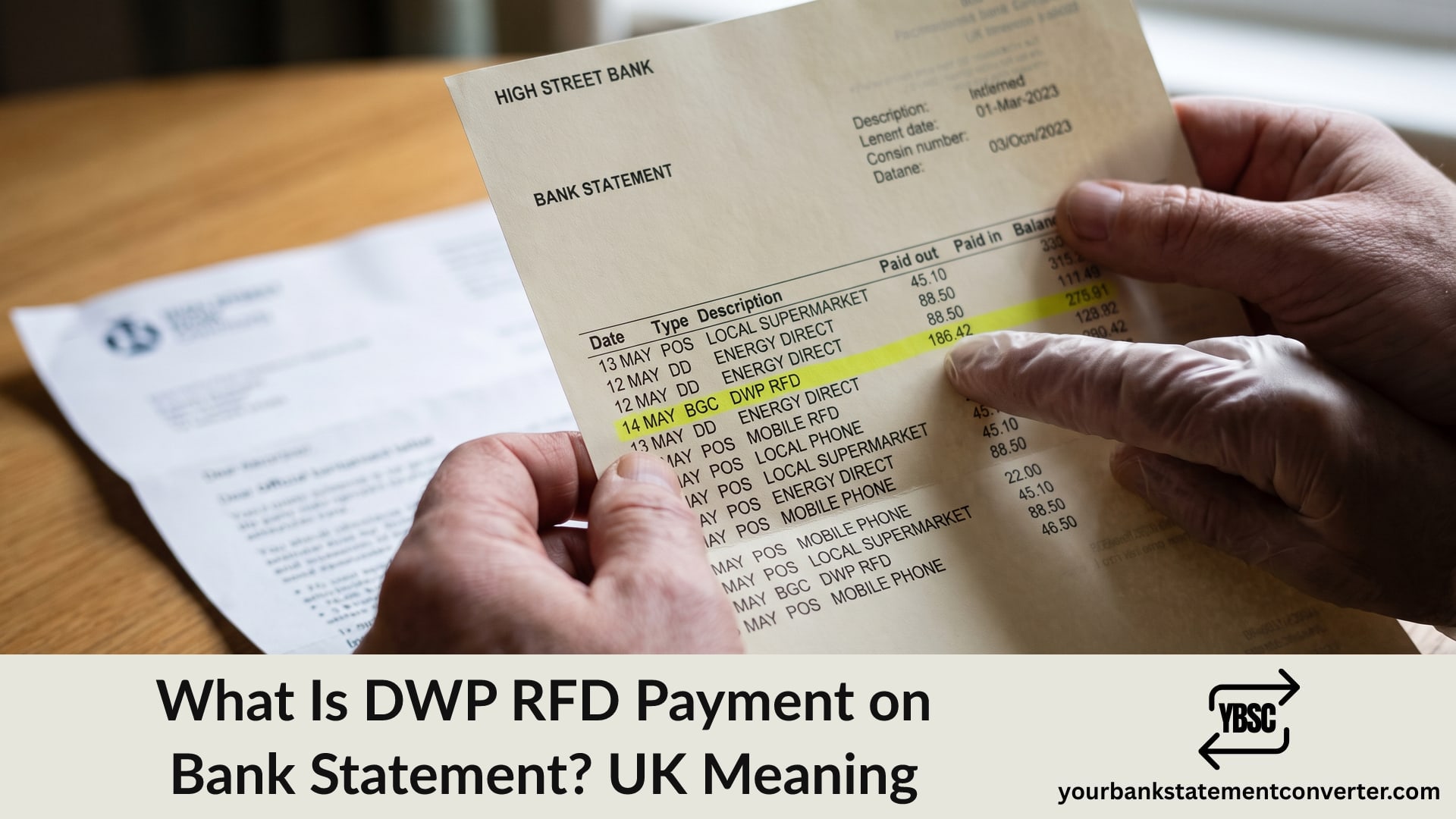
Unexpected money from a government department is unsettling rather than welcome, because you cannot tell whether you are meant to keep it. DWP RFD payment on a bank statement most commonly indicates a refund or correction from the Department for Work and Pensions.
This guide explains what usually triggers one, why the DWP does not publish these codes, and how to confirm the money is genuinely yours.
Key Takeaways
- RFD generally stands for refund, meaning a correction rather than a regular benefit.
- Common causes are underpayments, backdated claims and reassessments.
- The DWP publishes no official code list, so treat the letters as an indication.
- The payment is often a one-off, unlike a normal benefit cycle.
- Never spend money you cannot account for, since overpayments are recoverable.
What an RFD Payment Usually Is
Read it as a correction rather than an entitlement.
Where the DWP has paid you less than you were owed, or a decision changes in your favour, the shortfall is paid separately from your regular benefit. That correction is what an RFD reference typically marks.
Common triggers include:
- An underpayment corrected, where an error in your award is fixed
- A backdated claim, paying entitlement from an earlier date
- A reassessment or appeal decision going in your favour
- A hardship payment adjustment
- A deduction refunded, where money was taken in error
Because these are corrections, the amount rarely matches your usual benefit figure and often arrives outside your normal payment cycle. Both are useful identifying signs.
Why You Cannot Look the Code Up
Worth saying plainly, because it explains the contradictory answers online.
The DWP does not publish a list of its bank statement codes. Government payment systems generate short identifiers to fit the limited space in a statement description, and those references are internal.
So confident single-definition articles about these codes are generally inference rather than fact. The reliable approach is checking the payment itself, which is covered next. Our guide to DWP XB explains the same point about processing references.
How to Confirm What the Payment Covers
Four checks, in order.
Look at your online benefit account. It shows payments made and the decision behind them, which is usually enough on its own.
Check for a recent decision letter. Corrections normally follow a letter explaining what changed and why.
Compare against your usual amount. A figure that does not match your regular benefit points to a correction rather than a scheduled payment.
Call the relevant benefit helpline with the date and amount. Only the DWP can confirm which entitlement a payment settled.
Reading the untruncated description helps too, since the PDF statement often carries more text than your banking app.
If You Were Not Expecting It
Handle unexpected government money carefully rather than optimistically.
Do not spend it. Overpaid benefits are recoverable, and the DWP does pursue them. Spending the money makes repayment harder without preventing it.
Report it promptly, explaining what arrived and when.
Keep a record of the report, since that protects you if questions follow later.
Be cautious about anyone contacting you regarding the payment. The DWP will never ask you to forward money on, and a known scam involves money appearing followed by a request to transfer it elsewhere. Our guide to automated credit covers unexpected credits more broadly.
Tracking Corrections Alongside Regular Payments
Corrections arriving outside your normal cycle make an account harder to follow, particularly where several benefits pay in on different rhythms.
Our bank statement converter turns PDF statements into clean, searchable spreadsheets. Filter the description column for DWP and sort by amount, and the one-off corrections separate immediately from the regular payments.
Conclusion
To sum up, DWP RFD payment on a bank statement generally marks a refund or correction rather than a regular benefit, arising from an underpayment, a backdated claim or a decision going in your favour. Since the DWP publishes no code list, confirm it through your online benefit account or a decision letter rather than the letters themselves. Never spend a payment you cannot account for, because overpaid benefits are recoverable.
FAQ
1.What is a DWP RFD payment on a bank statement?
RFD generally indicates a refund or correction from the Department for Work and Pensions, typically covering an underpayment, a backdated claim or a decision that changed in your favour.
2.Is DWP RFD an official code?
No. The DWP does not publish a list of its bank statement references. The letters are an internal identifier, which is why explanations of them vary online.
3.Why is the amount different from my usual benefit?
Because a correction pays a shortfall rather than a scheduled entitlement. The figure reflects what you were owed, not your normal payment.
4.How do I find out what the payment was for?
Check your online benefit account and any recent decision letter, then call the relevant helpline with the date and amount if it remains unclear.
5.What if I was not expecting the money?
Do not spend it. Report it to the DWP promptly with the date and amount, and keep a record. Overpaid benefits are recovered regardless of whether the money has been spent.
6.Could an unexpected DWP payment be a scam?
The payment itself comes from the DWP. However, scammers exploit these credits by contacting people afterwards asking them to forward the money on. The DWP will never ask you to do that.






