
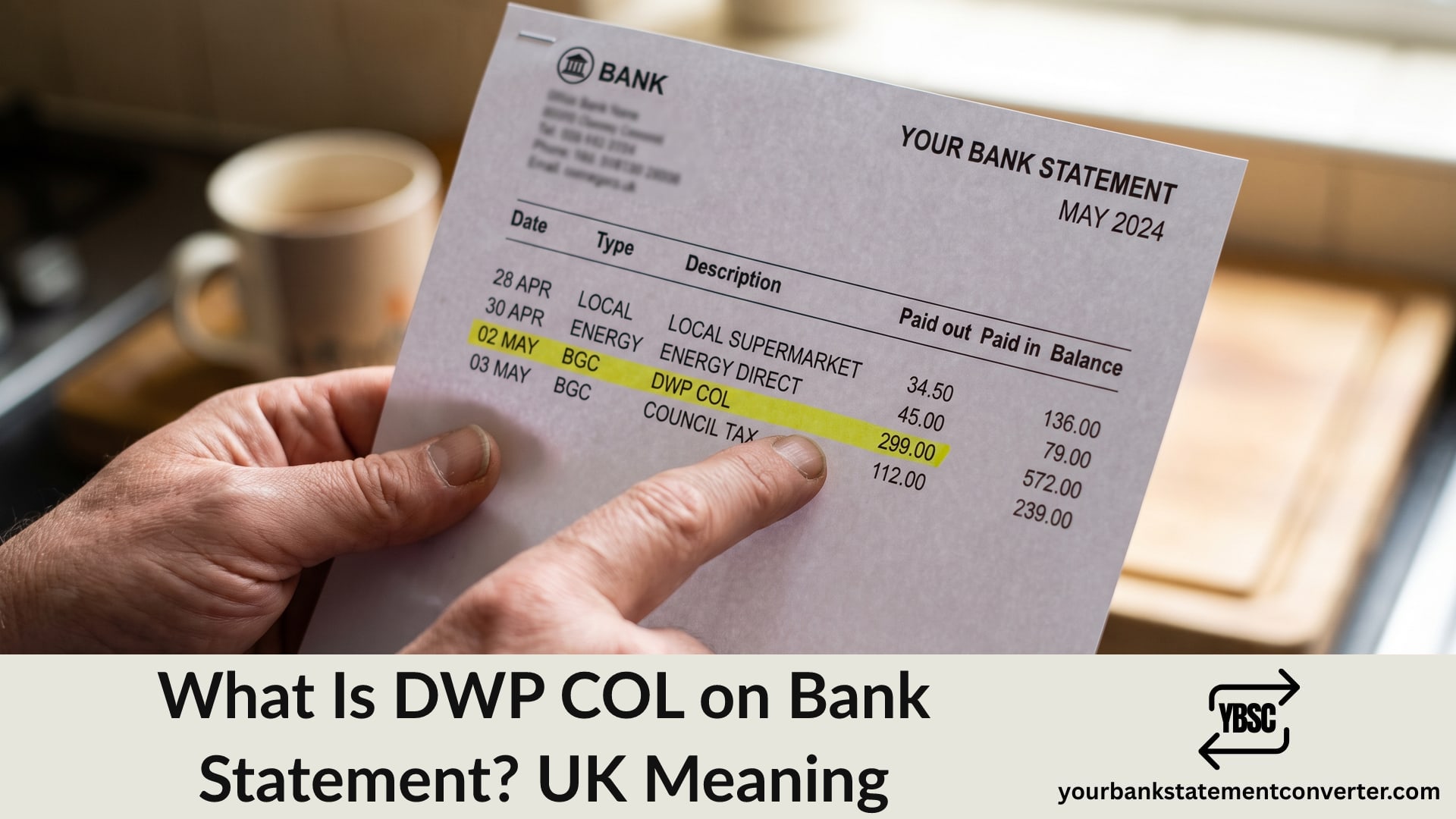
An unexpected government payment prompts two questions at once: what is it, and am I supposed to have it? DWP COL on a bank statement points to Cost of Living support paid by the Department for Work and Pensions.
This guide explains what the payments were, who qualified, and how to check whether one that arrived was genuinely yours.
Key Takeaways
- COL stands for Cost of Living, referring to government support payments.
- Payments went to people receiving qualifying benefits during set periods.
- They arrived as one-off credits, not as a regular entitlement.
- You did not need to apply; qualifying claimants were paid automatically.
- Nobody legitimate charges a fee to claim these payments for you.
What Cost of Living Payments Were
The UK government made a series of one-off support payments to households on certain benefits, intended to help with rising energy and living costs.
Key features that help you identify one:
- Automatic payment. Qualifying claimants received them without applying.
- A one-off credit, not a recurring entitlement.
- A fixed amount, the same for everyone in a qualifying group.
- Paid into the same account as the underlying benefit.
- A distinctive reference, often including COL or a similar code.
Because they were fixed amounts, the figure on your statement is the fastest way to identify which payment round it belonged to.
Who Qualified
Eligibility depended on receiving a qualifying benefit during a defined assessment period. Broadly, that covered means-tested benefits, disability benefits and pensioner households, each with its own payment and timing.
The critical detail is the qualifying period. Eligibility was assessed on whether you were entitled during specific dates, not on when the payment arrived. That is why some people who claimed a benefit shortly afterwards received nothing while a neighbour did.
Since the schemes ran to set timetables, check the official guidance on GOV.UK for the round matching your payment date rather than relying on general summaries.
How to Check a Payment Was Yours
Work through these before assuming anything.
Match the amount against the published figure for that round. Fixed amounts make this straightforward.
Check which benefits you received during the relevant qualifying period, not just now.
Look at your online benefit account, which shows payments made and the entitlement behind them.
Read the untruncated description on the PDF statement, since it often carries a longer reference than your banking app shows.
Call the relevant helpline if it is still unclear. Only the DWP can confirm definitively.
Our guides to DWP XB and DWP CA cover the other codes you may see alongside it.
If the Payment Was Not Yours
Occasionally a payment arrives for someone who did not qualify.
Do not spend it. Overpaid government money is recoverable, and spending it does not stop recovery.
Report it to the DWP promptly, giving the date and amount.
Keep a record of when you reported it and who you spoke to.
The Scam You Should Know About
Cost of Living payments attracted a large volume of fraud, so this is worth stating plainly.
Nobody legitimate charges a fee to claim these payments. Qualifying claimants were paid automatically.
The DWP does not text or email asking you to apply through a link. Messages claiming you must register, verify details or click to claim are fraudulent.
Never share bank details, National Insurance numbers or passwords in response to a message about government support.
Where you receive such a message, do not engage with it. Check GOV.UK directly instead, typing the address yourself rather than following a link.
Tracking Government Payments
Where several benefits and one-off payments reach the same account, working out what arrived and when takes longer than it should.
Our bank statement converter turns PDF statements into clean, searchable spreadsheets. Filter the description column for DWP, sort by date, and every government payment across the year lines up with its amount and reference.
Conclusion
To sum up, DWP COL on a bank statement indicates a Cost of Living support payment from the Department for Work and Pensions, paid automatically as a one-off credit to people receiving qualifying benefits during set periods. Match the amount against the published figure and check which benefits you received during the qualifying window. Never respond to messages asking you to apply or pay a fee, because these payments required no application at all.
FAQ
1.What is DWP COL on a bank statement?
COL stands for Cost of Living. The entry is a one-off government support payment made by the Department for Work and Pensions to households receiving qualifying benefits.
2.Did I have to apply for a Cost of Living payment?
No. Qualifying claimants were paid automatically into the account already receiving their benefit. Any message asking you to apply is fraudulent.
3.Why did I not receive one when someone else did?
Eligibility depended on receiving a qualifying benefit during a specific assessment period. Claiming shortly before or after that window meant no payment, even where the benefit was the same.
4.How do I check a payment was genuinely mine?
Match the amount against the published figure for that round, check which benefits you held during the qualifying period, and look at your online benefit account.
5.What should I do if I received one in error?
Do not spend it. Report it to the DWP with the date and amount, and keep a record of the report. Overpaid government money is recoverable.
6.Is someone offering to claim it for me a scam?
Yes. Nobody legitimate charges a fee for these payments, and no application was ever required. Treat any such offer or message as fraudulent.






