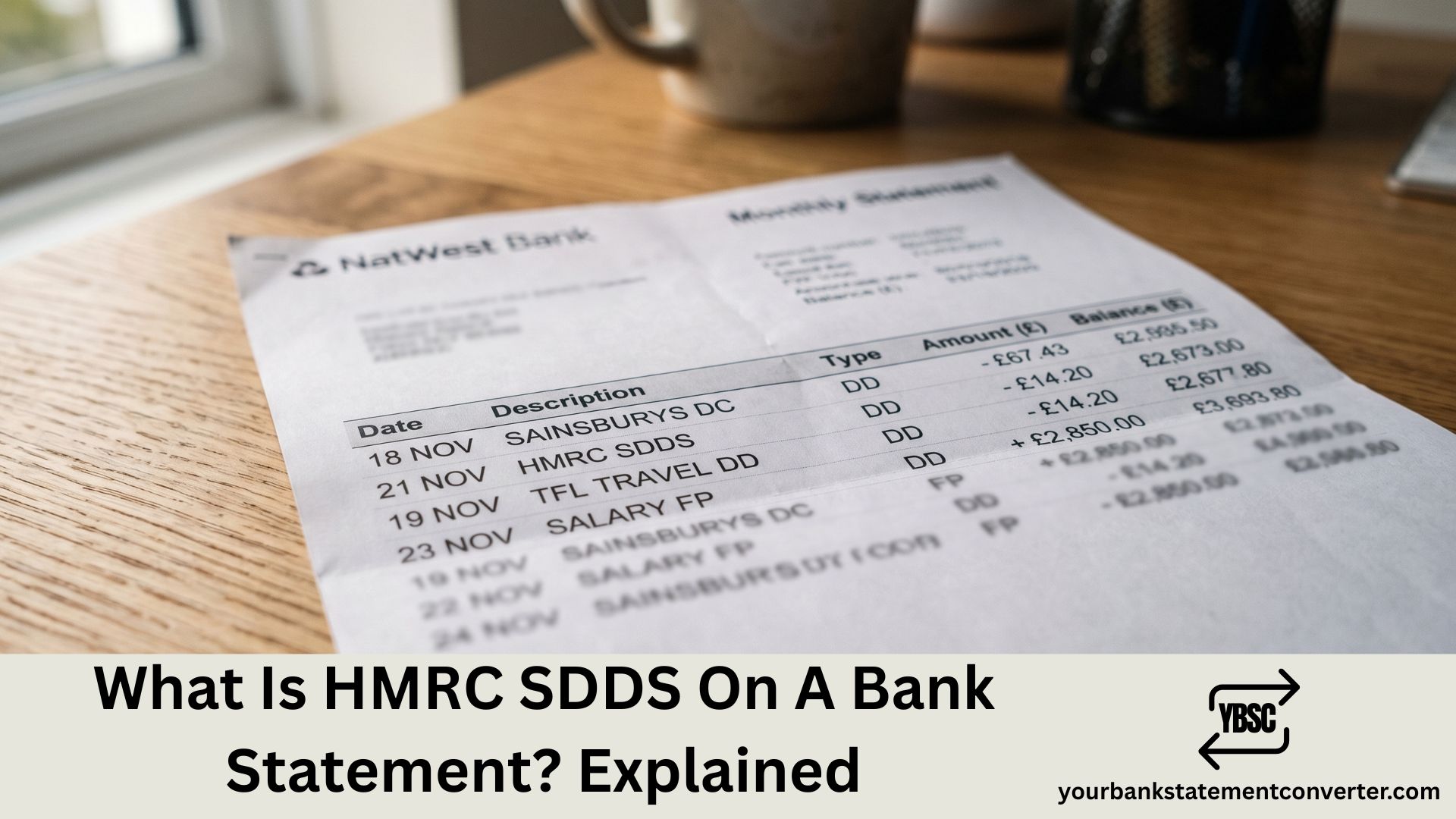
HMRC SDDS on your bank statement is a recurring Direct Debit payment collected by HM Revenue and Customs, most commonly for PAYE, Class 1A National Insurance, or other tax payments you’ve set up to be taken automatically. SDDS stands for the Self Assessment and other recurring Direct Debit system HMRC uses to take regular tax payments straight from your bank account once you’ve set up the instruction. If you see this entry, it means HMRC has collected a payment under a Direct Debit you authorised, not an unexpected or unauthorised charge.
Key Takeaways
- It represents a recurring Direct Debit payment collected automatically by HMRC, typically for PAYE, Class 1A National Insurance, VAT, or a Self Assessment Budget Payment Plan.
- One-off Direct Debit payments to HMRC show as “HMRC NDDS” instead, while SDDS relates specifically to recurring Direct Debits set up once and collected automatically each time.
- HMRC will tell you the date and amount no later than three working days before the payment is collected from your account.
- You can view, change, or cancel your Direct Debit instruction through your HMRC online account at any time.
- It only appears if you, your business, or your accountant has previously set up a recurring Direct Debit with HMRC, so it should always relate to a tax payment you authorised.
What Does SDDS Stand For?
SDDS reflects HMRC’s system for collecting recurring Direct Debit payments automatically, based on the figures in your submitted return. Once it’s set up, you don’t need to take any further action each time, as HMRC collects the amount due directly, based on whatever you’ve filed. This is different from a one-off Direct Debit payment, which appears separately as “HMRC NDDS” instead.
Which Payments Show As HMRC SDDS?
You’ll typically see “HMRC SDDS” on your statement if you’ve set up a recurring Direct Debit for any of these:
- Employers’ PAYE. Tax and National Insurance deducted from employee pay, collected automatically based on your Full Payment Submission (FPS).
- Employers’ Class 1A National Insurance. Contributions due on benefits provided to employees, also collected via this recurring system.
- VAT, where a recurring Direct Debit has been set up. Your VAT return amount is collected automatically once you’ve authorised this through your VAT online account.
- Self Assessment Budget Payment Plans. Regular advance payments toward your future Self Assessment tax bill, set up voluntarily to spread the cost.
How Does HMRC Decide When To Collect An SDDS Payment?
For PAYE, HMRC usually collects the payment shortly after the 22nd of the month, or four working days after you file your return if you file it after the 19th. For Class 1A National Insurance and other recurring Direct Debits, the timing follows a similar pattern tied to your filing date. In every case, HMRC is required to tell you the exact date and amount no later than three working days before the payment is taken, so you should have advance notice before SDDS appears on your statement.
Is HMRC SDDS A Legitimate Charge?
Yes. If you have set up a recurring Direct Debit with HMRC for PAYE, Class 1A National Insurance, VAT, or a Self Assessment Budget Payment Plan, this is the expected method HMRC uses to collect that payment automatically. It is not a scam, and it is not a charge from a third party unrelated to your tax affairs.
What To Do If You Don’t Recognise An HMRC SDDS Payment
- Check whether you, your business, or your accountant set up a recurring Direct Debit with HMRC. This is most often linked to PAYE or Class 1A National Insurance if you employ staff, or VAT or Self Assessment if you’re a sole trader or business.
- Compare the amount to your most recent return. SDDS payments are based on the figures from your submitted return, so the amount should match what you filed.
- Log into your HMRC online account. Your account will show your Direct Debit status, recent payments, and any outstanding balances, which can confirm whether the SDDS entry matches a genuine collection.
- Contact HMRC directly if it still doesn’t add up. If the amount looks wrong or you genuinely have no Direct Debit set up, contact HMRC’s relevant helpline, such as the VAT or PAYE helpline, to query the payment directly.
HMRC SDDS vs HMRC NDDS
These two references are easy to confuse but represent different payment types:
- HMRC SDDS relates to a recurring Direct Debit, set up once and collected automatically going forward based on each new return.
- HMRC NDDS relates to a one-off Direct Debit payment, set up individually each time you want HMRC to collect a specific amount, commonly used for Self Assessment or Corporation Tax payments made one at a time.
Final Thoughts
HMRC SDDS on your bank statement reflects a genuine, expected tax payment collected through a recurring Direct Debit you or your business previously set up with HMRC. It typically relates to PAYE, Class 1A National Insurance, VAT, or a Self Assessment Budget Payment Plan, and HMRC is required to notify you of the amount and date before collecting it. If you’d like a clearer way to track recurring tax payments like this alongside your other business outgoings, a bank statement converter can turn your PDF statements into organised, searchable spreadsheets, making entries like HMRC SDDS easier to match against your filed returns. If this is work you repeat, the pricing page sets out the per-page tiers.
FAQ
Most confusing entries come down to a code or a company name you have not met before. Our guide to what the abbreviations mean covers the codes, and what is on a bank statement explains the rest of the layout.
1.What does HMRC SDDS mean on my bank statement?
It represents a recurring Direct Debit payment collected automatically by HMRC, typically for PAYE, Class 1A National Insurance, VAT, or a Self Assessment Budget Payment Plan.
2.Is HMRC SDDS the same as a one-off tax payment?
No. One-off Direct Debit payments to HMRC show as “HMRC NDDS” instead, while SDDS relates specifically to recurring Direct Debits set up once and collected automatically each time.
3.How will I know when an HMRC SDDS payment is coming?
HMRC will tell you the date and amount no later than three working days before the payment is collected from your account.
4.Can I cancel an HMRC SDDS Direct Debit?
Yes. You can view, change, or cancel your Direct Debit instruction through your HMRC online account at any time.
5.Is HMRC SDDS a scam or unauthorised charge?
No. It only appears if you, your business, or your accountant has previously set up a recurring Direct Debit with HMRC, so it should always relate to a tax payment you authorised.
6.What if the SDDS amount doesn’t match what I expected to pay?
Compare it against your most recently filed return first, then log into your HMRC online account or contact HMRC directly if the figures still don’t match.