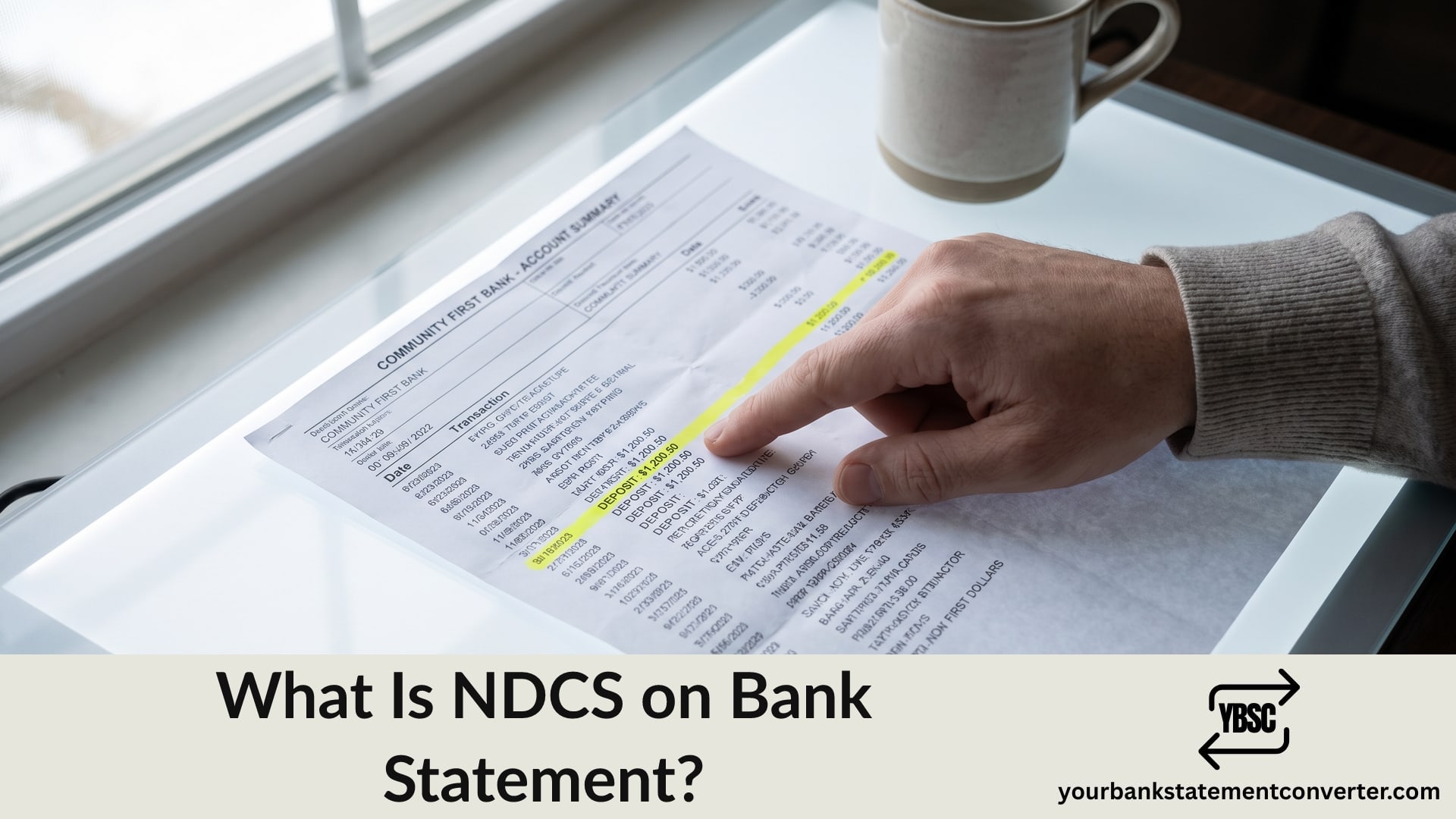
Four letters on a Direct Debit rarely tell you who is collecting the money. NDCS on a bank statement is a donation to the National Deaf Children’s Society, a registered UK charity, and the initials are simply how the name fits the space available.
This guide explains who the charity is, what the payment is, how to change or stop it, and what to do when nobody in the household set it up.
Key Takeaways
- NDCS is the National Deaf Children’s Society, a registered UK charity.
- It is registered as charity number 1016532 in England and Wales, and SC040779 in Scotland.
- The entry is almost always a regular donation rather than a fee for anything.
- Some donations run as a continuous payment authority, not a Direct Debit.
- The charity’s Supporter Care team handles changes and cancellations.
Who the Charity Is
The National Deaf Children’s Society supports deaf children and young people, their families, and the professionals who work with them. Its work covers information, advice and one-to-one family support.
The charity’s registrations are public:
- Charity number 1016532 in England and Wales
- Charity number SC040779 in Scotland
Those numbers are the quickest way to confirm the organisation is genuine. Every registered UK charity appears on the Charity Commission register, and checking a number there takes under a minute.
Why the Statement Shows Initials
Nothing sinister is happening here, and the reason applies across most charity entries.
Merchant and Bacs descriptors pass through fields with a fixed character limit. “The National Deaf Children’s Society” does not fit, so the initials go through instead.
That leaves you with an acronym and no context, which is exactly why the entry sends people searching. Charities, councils and membership bodies all abbreviate this way, and our guide to what the abbreviations on a bank statement mean covers the habit in detail.
What an NDCS on Bank Statement Payment Usually Is
Regular giving accounts for nearly all of these entries.
Look at the shape of it:
- A fixed monthly amount on the same date is a regular donation
- A single irregular payment is a one-off gift or an event sponsorship
- An annual amount may follow a fundraising event or appeal
Donation amounts are chosen by the donor, so there is no standard figure to compare against. The date and the regularity tell you more than the amount does.
Direct Debit or Continuous Payment Authority
This distinction matters more than it sounds, because it changes how you stop the payment.
Some donors have reported money being collected under a continuous payment authority, which sits on a card rather than as a Direct Debit. People then try to cancel a Direct Debit that does not exist and find nothing to cancel.
Tell them apart like this:
- A Direct Debit appears in your bank’s Direct Debit list and is marked DD
- A continuous payment authority is a recurring card payment and appears among card transactions
Your bank can list every active Direct Debit on the account. If the NDCS on bank statement entry does not appear on that list, it is a card authority and needs stopping a different way.
How to Change or Stop the Donation
Contact the charity first. Charities generally make this straightforward, and it lets them keep their records accurate.
Contact Supporter Care. The charity has a dedicated team for changing, pausing or cancelling a regular gift, reachable through its website.
Cancel a Direct Debit through your bank if you prefer. Your bank must act on that instruction, and the Direct Debit Guarantee covers anything taken in error with an immediate refund.
Withdraw a card authority by telling your bank to stop the recurring payment. Again, the bank must act without needing the charity’s agreement.
Consider reducing rather than stopping. Charities would usually rather keep a smaller regular gift than lose it, so ask about lowering the amount if cost is the issue.
If Nobody Set Up the Donation
Ask around the household before assuming an error, since one person often arranges giving for a couple or family.
Where genuinely nobody recognises it, contact the charity directly. It can check its records against your name, address and the amount.
This is worth knowing: the charity introduced a policy of confirming by phone with older donors before starting a Direct Debit, so that they understood and were happy to give regularly. That change followed concerns about how some regular gifts were set up. If an older relative has an NDCS payment nobody can account for, raising it with Supporter Care is entirely reasonable.
Checking a Year of Giving
Charitable giving adds up quietly across several organisations.
Our bank statement converter turns PDF statements into clean, searchable spreadsheets. Filter for the charity’s initials, total the column, and you have an annual figure, which is also useful for Gift Aid records and tax returns. If you want a refresher on the columns, what is on a bank statement walks through the page.
Conclusion
To sum up, NDCS on a bank statement is a donation to the National Deaf Children’s Society, registered as charity 1016532 in England and Wales and SC040779 in Scotland. A fixed monthly amount is regular giving, and the initials appear simply because the full name will not fit. Check whether the payment is a Direct Debit or a recurring card authority before trying to stop it, because the two are cancelled differently.
FAQ
1.What does NDCS stand for on a bank statement?
The National Deaf Children’s Society, a registered UK charity supporting deaf children, young people and their families. It is registered as charity 1016532 in England and Wales and SC040779 in Scotland.
2.Is an NDCS payment a donation?
Almost always. A fixed monthly amount is regular giving, while a single irregular payment is usually a one-off gift or event sponsorship.
3.Why does my statement only show initials?
Bacs and card descriptors have a fixed character limit, and the charity’s full name does not fit. Initials go through instead, which is standard for charities and membership bodies.
4.How do I cancel a regular donation?
Contact the charity’s Supporter Care team, or tell your bank to cancel the Direct Debit. If the payment is a recurring card authority rather than a Direct Debit, instruct your bank to withdraw that authority.
5.There is no Direct Debit to cancel. Why?
Some donations run as a continuous payment authority on a card rather than as a Direct Debit. Ask your bank to stop the recurring card payment instead.
6.An elderly relative has this payment and cannot explain it. What should I do?
Contact Supporter Care with the name, address and amount. The charity introduced phone confirmation with older donors before starting Direct Debits, so raising a query like this is entirely reasonable.