
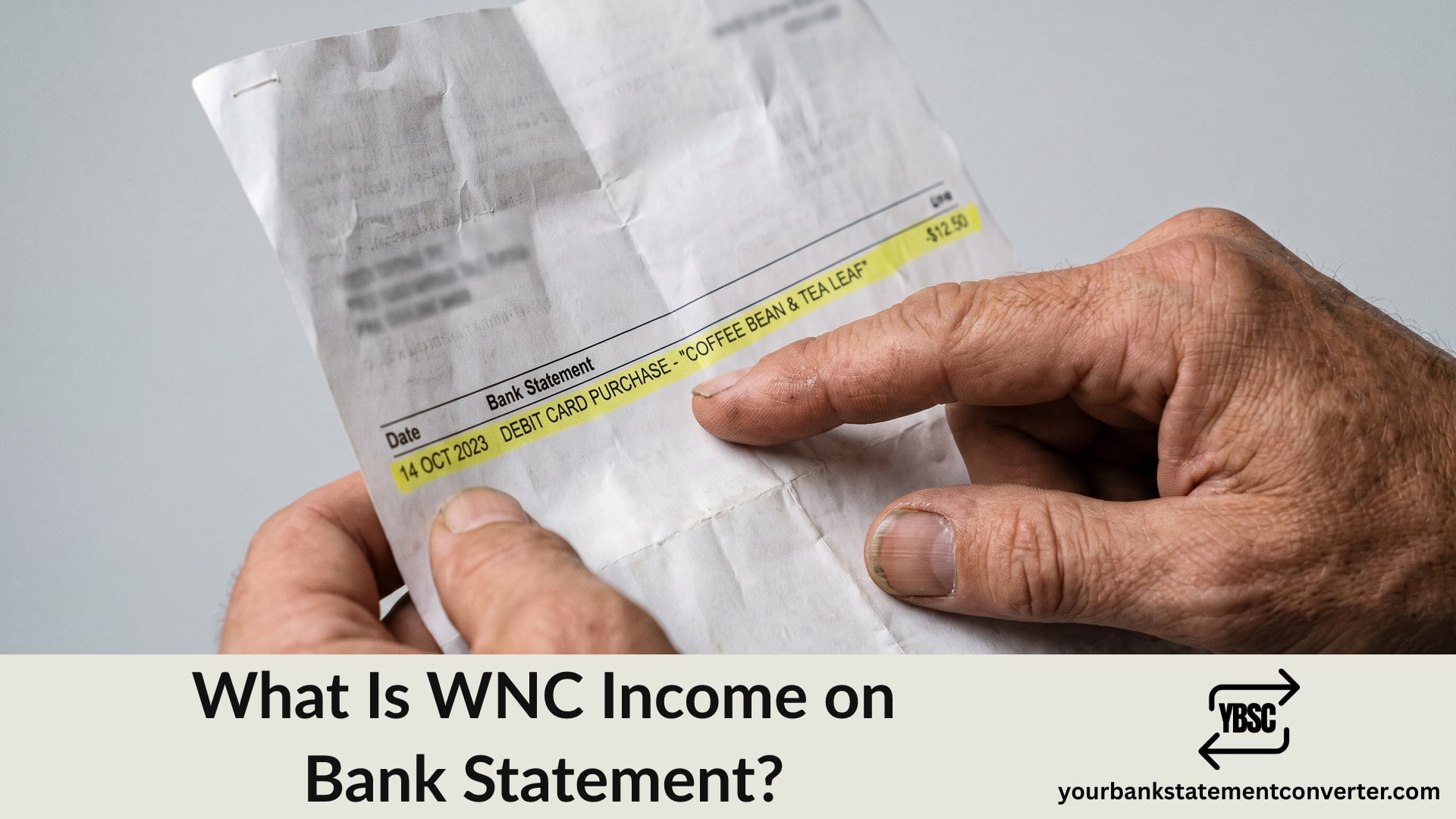
Initials on a Direct Debit rarely explain themselves, and a council entry is easy to mistake for something else entirely. WNC Income on a bank statement is a payment collected by West Northamptonshire Council, most often for Council Tax.
This guide explains what the initials stand for, what the payment usually covers, how to check the amount is right, and what to do if two came out in the same month.
Key Takeaways
- WNC stands for West Northamptonshire Council, the unitary authority for the area.
- The entry is a collection into the council’s income account, usually Council Tax.
- It normally appears as a Direct Debit on the same date each month.
- Council Tax is typically collected over 10 months, so two blank months are normal.
- The council has wrongly double-charged residents before, so duplicates are worth checking.
What WNC Stands For
West Northamptonshire Council is a unitary authority covering Northampton, Daventry, Towcester, Brackley and the surrounding area. It formed in April 2021 when the previous county and district councils were reorganised.
“Income” in the descriptor refers to the council’s income account, which is the account collections are paid into. The wording describes the destination rather than the specific service you are paying for.
That is why the entry tells you a council took money without telling you what for. Plenty of statement entries name a processor or an account rather than a service, and our guide to what the abbreviations on a bank statement mean explains the habit.
What WNC Income on Bank Statement Usually Covers
Council Tax accounts for most of these entries, but councils collect a range of payments through the same route.
Likely candidates include:
- Council Tax, by far the most common
- Business rates for a registered business address
- Adult social care contributions
- Garden waste or similar subscription services
- Rent where the council is the landlord
- Penalty charge notices and other one-off invoices
Amount and frequency separate them quickly. A steady monthly figure on a fixed date is almost certainly Council Tax. An irregular one-off is more likely an invoice or a fine.
Why Nothing Comes Out in February and March
This confuses people every single year, so it is worth stating plainly.
Council Tax is normally spread over 10 monthly instalments running from April to January. February and March are payment-free months by default, which means a missing WNC Income on bank statement line in those months is not an error.
You can ask the council to spread the bill over 12 months instead. Doing so lowers each instalment and removes the two-month gap, which some people find easier to budget around.
Checking the Amount Is Right
Your annual bill is the reference point, not last year’s payments.
- Find your Council Tax bill for the current year, issued each March
- Divide the annual total by the number of instalments you agreed
- Compare that figure against what left your account
- Check your band and discounts are still correct on the bill
Single-person discount, student exemptions and support schemes all change the total. If your circumstances changed and you did not tell the council, the instalment will still reflect the old position.
If Two Payments Came Out at Once
Take this seriously rather than assuming your own error.
West Northamptonshire Council has previously taken Council Tax twice from more than 15,000 residents in a single month because of a processing fault. A duplicate collection is therefore a known risk with this authority, not an unlikely one.
If it happens:
- Contact the council and report the duplicate collection
- Claim under the Direct Debit Guarantee, which entitles you to an immediate refund from your bank for an incorrectly taken payment
- Keep the statement line as evidence of both collections
- Check the following month to confirm the schedule has corrected itself
The Direct Debit Guarantee is the strongest route, because your bank refunds you straight away rather than waiting for the council to process it.
If You Do Not Recognise It at All
Not every household member handles the council account, so ask first.
Where nobody in the household set it up, contact the council with the amount and date. They can trace which account the payment landed against. If it genuinely relates to a different property or person, the council can refund and cancel the mandate.
Reading the surrounding entries helps you judge whether the payment fits your usual pattern, and what is on a bank statement explains how the columns and balances fit together.
Checking a Full Year of Council Payments
Ten instalments spread across two tax years are tedious to add up by hand.
Our bank statement converter turns PDF statements into clean, searchable spreadsheets. Filter the description column for the council’s name, total the column, and compare it against your annual bill. Any gap between the two is the number worth taking to the council.
Conclusion
To sum up, WNC Income on a bank statement is a payment collected by West Northamptonshire Council into its income account, and in most cases that means Council Tax. A fixed monthly figure with nothing in February and March is the normal 10-instalment pattern. Given this council’s record of duplicate collections, check any month showing two payments and claim under the Direct Debit Guarantee if one was taken in error.
FAQ
1.What does WNC stand for on a bank statement?
West Northamptonshire Council, the unitary authority covering Northampton, Daventry, Towcester, Brackley and the surrounding area. “Income” refers to the council’s income account.
2.Is WNC Income always Council Tax?
No, though Council Tax is the most common reason. The same route collects business rates, garden waste subscriptions, council rent, adult social care contributions and one-off invoices.
3.Why did nothing come out in February and March?
Council Tax is usually spread over 10 instalments from April to January, leaving February and March payment-free. You can ask the council to switch you to 12 instalments instead.
4.The council took two payments in one month. What do I do?
Report it to the council and claim under the Direct Debit Guarantee, which entitles you to an immediate refund from your bank. This council has wrongly double-charged thousands of residents before.
5.How do I check the amount is correct?
Compare it against your annual Council Tax bill divided by the number of instalments you agreed. Also check your band, single-person discount and any exemptions are still right.
6.I do not recognise this payment at all. What now?
Ask other members of your household first, then contact the council with the date and amount. They can trace which account it was credited to and refund it if it was taken in error.






