
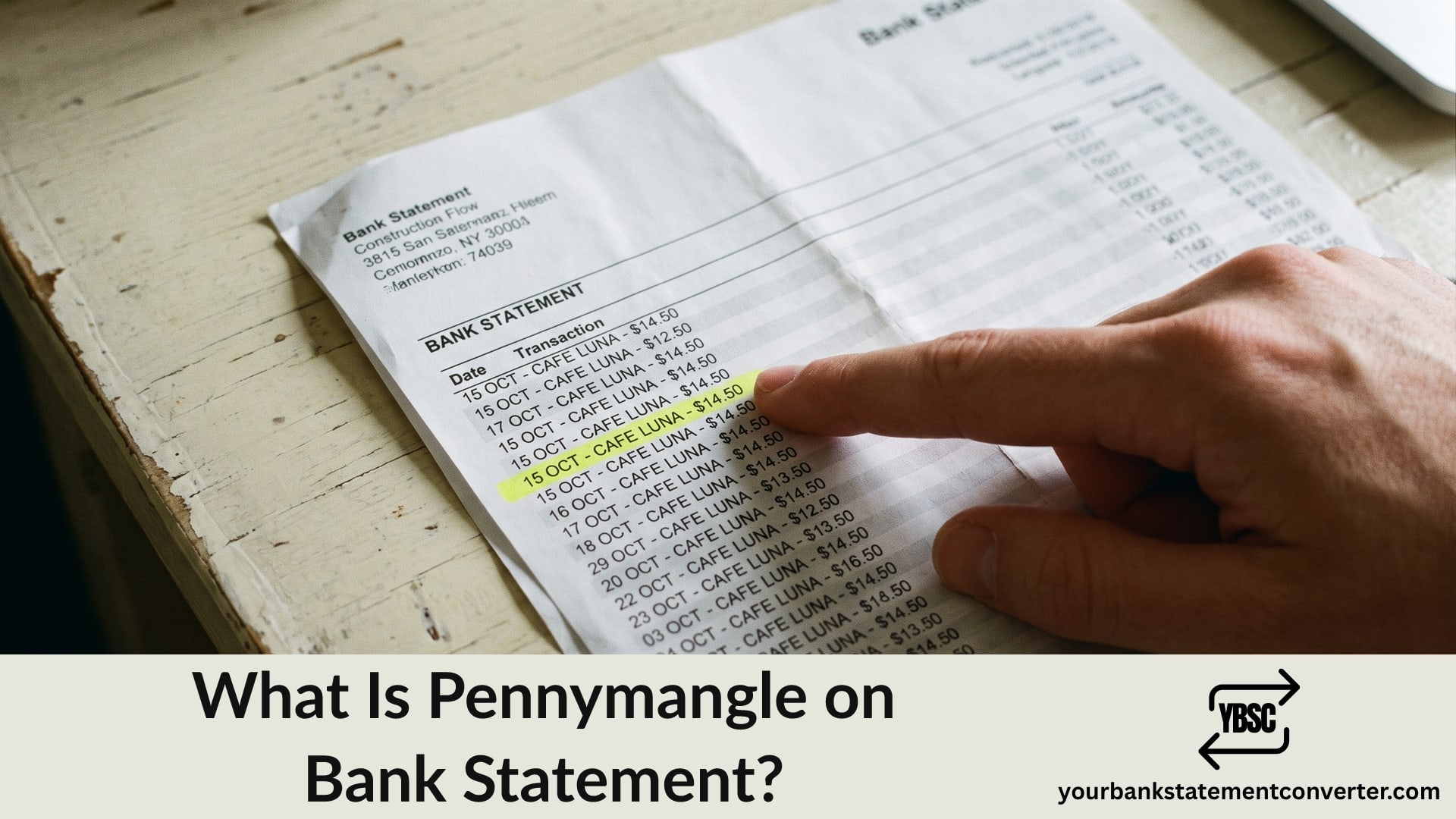
A charge of a pound or two from a company you have never heard of rarely feels worth chasing, but it still nags. Pennymangle on a bank statement almost always traces back to a souvenir machine at a day out rather than anything to worry about.
This guide explains who the company is, what the machines are, why the amount is so small, and how to confirm it yourself.
Key Takeaways
- Pennymangle Ltd is a UK company, number 08051795, based in Chard, Somerset.
- Cardholders report the charge comes from souvenir penny-press machines at attractions.
- Amounts are small, typically the cost of one pressed coin souvenir.
- The entry appears as a card purchase, not a Direct Debit or subscription.
- A single small charge that does not repeat is the normal pattern here.
Who Is Pennymangle Ltd?
Pennymangle Ltd is registered at Companies House under number 08051795, incorporated in May 2012 and based in Chard, Somerset. Its listed activity is agents involved in the sale of a variety of goods.
That description is broad by design and tells you very little on its own. The useful detail comes from cardholders who have matched the charge to where they were that day.
Their reports point consistently to one thing: penny press machines, the souvenir devices that flatten a coin and stamp a design onto it.
What a Penny Press Machine Actually Is
If the name means nothing to you, the machine probably will.
These are the coin-operated units found near exits and gift shops that:
- Take a small payment by card or coin
- Flatten and emboss a penny with a design tied to the venue
- Produce an elongated souvenir coin as a keepsake
They sit in zoos, museums, aquariums, heritage railways, theme parks, castles and visitor centres. Children feed them enthusiastically, which is why parents so often find the charge without remembering authorising it.
The venue’s name never reaches your bank, because the machine operator processes the payment rather than the attraction. Entries that name a processor instead of the place you visited are extremely common, and our guide to what the abbreviations on a bank statement mean covers why.
Why the Amount Is So Small
Scale is the strongest clue you have.
Pressed-coin souvenirs cost about what a vending snack does. If the Pennymangle on bank statement line shows a modest one-off sum rather than double figures, that fits the pattern exactly.
Be cautious about two things:
- Several charges on one day usually means several souvenirs, not an error
- Contactless minimums can make the charge slightly larger than the machine’s sticker price
Neither is a sign of anything wrong. Both are worth checking against where you were.
How to Confirm It Was You
Matching the date to your diary settles this faster than contacting anyone.
Work through it in this order:
- Check the transaction date against days out, school trips or holidays
- Ask whoever had the card, since children and partners often use these machines
- Look for a matching venue charge nearby, such as admission, parking or a cafe
- Check for a souvenir coin in a coat pocket, bag or bedroom drawer
An admission or car park charge on the same day from the same area is usually conclusive. The souvenir itself is even better evidence.
When It Is Worth Querying
Most of the time this needs no action at all. A few situations do.
The charge repeats monthly. Penny press machines are one-off purchases. A recurring pattern does not fit, so query it.
The amount is large. A single souvenir costs very little, so a substantial sum under this name deserves a call to your bank.
You have not been anywhere. If no day out, trip or attraction visit lines up for anyone with access to the card, treat it as a possible unauthorised transaction.
In those cases, contact your bank, report it, and ask whether the merchant details can be expanded. Banks can often tell you more about the terminal location than the statement shows.
Finding the Rest of That Day’s Spending
Small charges tell you more when you can see everything around them.
Our bank statement converter turns PDF statements into clean, searchable spreadsheets. Sort by date, look at the full day rather than the single line, and the trip that produced the charge usually becomes obvious. If you want a refresher on the columns first, what is on a bank statement walks through each part of the page.
Conclusion
To sum up, Pennymangle on a bank statement is a small card payment that cardholders consistently trace to souvenir penny-press machines at UK attractions, operated by Pennymangle Ltd of Chard, Somerset. A modest one-off amount matching a day out is entirely normal. Only a repeating charge, a large amount, or a date that matches nothing at all is worth raising with your bank.
FAQ
1.What is Pennymangle on a bank statement?
It is a card payment to Pennymangle Ltd, a UK company registered under number 08051795. Cardholders report the charge comes from souvenir penny-press machines at visitor attractions.
2.Why is the amount so small?
Because a pressed-coin souvenir costs roughly what a vending machine snack does. A small one-off figure is the normal pattern for this merchant.
3.Why does the attraction’s name not appear?
The machine operator processes the payment, not the venue. Your bank records the party taking the money, which is why the zoo, museum or theme park never shows up.
4.I have several Pennymangle charges on one day. Is that wrong?
Usually not. Several charges on the same date normally means several souvenirs were pressed, which happens quickly when children are involved.
5.Is Pennymangle a subscription?
No. These are one-off purchases. A charge under this name repeating every month does not fit the pattern and is worth querying with your bank.
6.What if I have not been anywhere?
Treat it as a possible unauthorised transaction. Contact your bank, report it, and ask whether they can give you more detail about where the terminal was located.






