
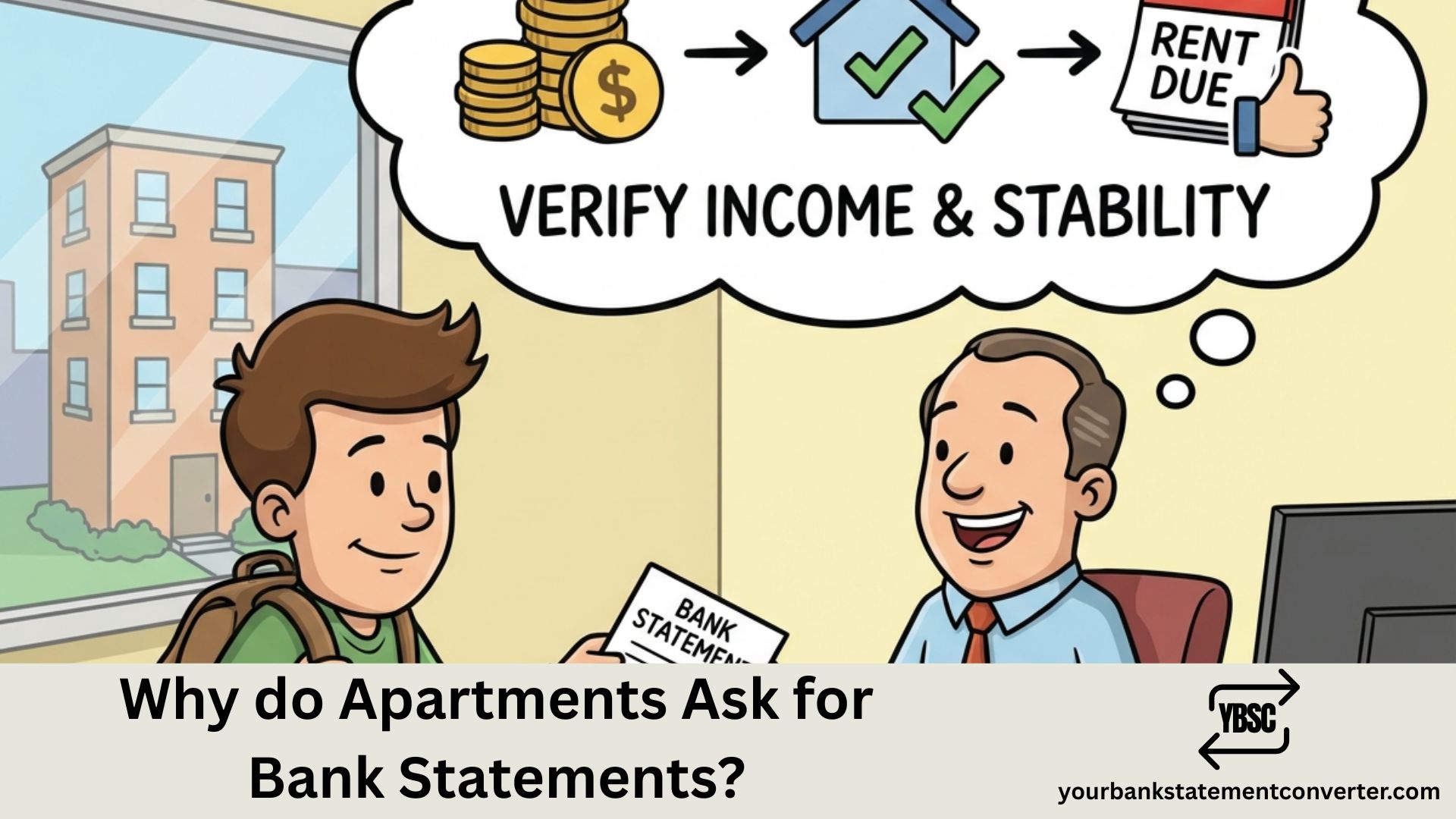
Finding the perfect apartment is exciting—until you hit the paperwork. If you’ve been asked to submit bank statements as part of your rental application, you might wonder why landlords need such personal financial information.
The short answer: landlords use bank statements to verify your income, assess your financial stability, and reduce the risk of renting to someone who can’t afford the rent. This guide explains everything you need to know about providing bank statements for your apartment application.
Why Do Apartments Ask for Bank Statements? [Quick Answer]
Apartments ask for bank statements to verify that you can afford the rent and that you’re financially responsible. While pay stubs show what you earn, bank statements show what actually lands in your account—and how you manage it.
Landlords and property managers typically look for:
- Consistent income deposits that match your stated earnings
- No frequent overdrafts or negative balances
- Sufficient savings to cover rent and emergencies
- Stable financial behavior over time
This helps them select reliable tenants who will pay rent on time every month.
What Do Landlords Look for on Bank Statements?
When reviewing your bank statements, landlords are looking for specific indicators of financial health:
1. Consistent Income Deposits
Landlords want to see regular deposits that align with your claimed income. If you say you earn $5,000/month, they expect to see approximately that amount deposited consistently.
What they’re checking:
- Frequency of deposits (weekly, bi-weekly, monthly)
- Amounts matching your pay stubs or stated income
- Consistency over the statement period
2. Account Balance and Savings
A healthy account balance shows you have a financial cushion. Many landlords want to see:
- At least 2–3 months’ rent in savings
- Stable or growing balance over time
- No pattern of running low at month-end
3. No Overdrafts or NSF Fees
NSF (Non-Sufficient Funds) charges and overdrafts are red flags. They suggest you may struggle to pay rent on time.
Red flags landlords watch for:
- Frequent overdraft fees
- Negative account balances
- Bounced check fees
- Repeated low balances before payday
4. Spending Patterns
While landlords aren’t judging your purchases, they do look at overall spending habits:
- Do expenses consistently exceed income?
- Are there large, unexplained withdrawals?
- Does spending leave room for rent?
5. Verification of Income Sources
Bank statements help landlords cross-reference your income claims. If your pay stubs say you earn $4,500/month from ABC Company, they expect to see matching deposits from that employer.
How Many Months of Bank Statements Do Apartments Require?
Most landlords request 2–3 months of bank statements. However, requirements vary:
| Situation | Typical Requirement |
|---|---|
| Standard rental application | 2–3 months |
| Self-employed applicants | 3–6 months |
| Gig workers / freelancers | 3–6 months |
| High-end rentals | 3–6 months + tax returns |
| Applicants with irregular income | 6+ months |
Why multiple months? A single month could show an unusually high or low balance. Multiple months reveal patterns and consistency.
Is It Legal for Landlords to Ask for Bank Statements?
Yes, it’s legal. Landlords can request bank statements as part of the tenant screening process under the Fair Credit Reporting Act (FCRA), provided they:
- Have a legitimate reason (verifying income/financial stability)
- Obtain your written consent before reviewing financial documents
- Apply the same requirements to all applicants equally (to avoid discrimination)
- Do not use the information to discriminate against protected classes
What Landlords CANNOT Do
- Require your bank login credentials
- Access your accounts directly without consent
- Share your financial information with unauthorized parties
- Use financial information to discriminate based on race, religion, gender, family status, or other protected characteristics
What If You Don’t Want to Provide Bank Statements?
You have the right to decline—but the landlord also has the right to reject your application or require alternative documentation.
Alternatives to Bank Statements
If you’re uncomfortable sharing full bank statements, you may be able to provide:
| Alternative Document | What It Shows |
|---|---|
| Pay stubs (2–3 months) | Current employment income |
| W-2 forms | Annual income from employer |
| Tax returns (1–2 years) | Total annual income |
| 1099 forms | Self-employment/freelance income |
| Employment verification letter | Job status and salary confirmation |
| Social Security award letter | Government benefit income |
| Pension statement | Retirement income |
Pro Tip: Offer multiple forms of income verification together. For example, pay stubs + tax return + employer letter provides strong proof without requiring detailed bank statements.
How to Prepare Your Bank Statements for a Rental Application
If you need to submit bank statements, follow these steps to present them professionally:
Step 1: Download Official Statements
- Log into your online banking
- Download PDF statements for the required months
- Ensure statements show your name, account type, and bank name
Step 2: Review Before Submitting
Check your statements for:
- Any overdrafts or NSF fees (be prepared to explain them)
- Large deposits that might raise questions
- Transactions you may need to clarify
Step 3: Highlight Income Deposits (Optional)
Make it easy for the landlord to identify your income by:
- Highlighting or marking regular paycheck deposits
- Noting any recurring income sources
Step 4: Redact Sensitive Information (If Allowed)
Some landlords allow you to redact:
- Full account numbers (show last 4 digits only)
- Non-income transactions
- Routing numbers
Important: Ask the landlord first if redaction is acceptable. Some require unredacted statements.
Step 5: Include a Brief Explanation (If Needed)
If your statements show anything unusual, provide a written explanation:
- Large one-time deposit? Note if it’s a gift, tax refund, or bonus.
- Temporary low balance? Explain the circumstances.
- Multiple income sources? Clarify each deposit type.
Convert Your Bank Statements to a Clean Format
PDF bank statements can be difficult to organize, especially if you’re applying to multiple apartments or need to highlight specific information. YourBankStatementConverter.com helps renters convert their PDF statements into organized Excel or CSV files.
Why Renters Use This Tool
- Organize multiple months of statements into a single spreadsheet
- Highlight income deposits clearly for landlords
- Calculate income totals to prove you meet rent requirements
- Create professional summaries to accompany your application
- Prepare for multiple applications efficiently
How It Works
- Upload your PDF bank statements
- Get clean, organized Excel data in seconds
- Filter and sort transactions as needed
- Export a professional summary for your application
Perfect for: Self-employed renters, freelancers, gig workers, and anyone who wants to present their finances clearly and professionally.
👉 Try Your Bank Statement Converter Now — Make your rental application stand out with organized financial documentation.
Special Situations: Proving Income Without Traditional Pay Stubs
Not everyone has a traditional 9-to-5 job. Here’s how different types of renters can use bank statements:
Self-Employed Renters
If you’re self-employed, bank statements are often your primary proof of income. Landlords will want:
- 3–6 months of statements showing business deposits
- Tax returns (1–2 years) to verify annual income
- 1099 forms from clients
- Profit and loss statements (optional)
Tip: Use YourBankStatementConverter.com to organize your deposits and create a clear income summary.
Freelancers and Gig Workers
Freelance income varies month to month. Help landlords see the big picture:
- Provide 6 months of bank statements
- Include platform payout summaries (Uber, DoorDash, Fiverr, etc.)
- Calculate your average monthly income
Retirees and Social Security Recipients
Fixed-income renters can provide:
- Social Security award letters
- Pension statements
- Bank statements showing regular deposits
- Investment or annuity income documentation
Cash-Based Workers
If you’re paid in cash:
- Deposit cash regularly into your bank account
- Provide 3–6 months of statements showing consistent deposits
- Include tax returns showing reported cash income
- Get a signed letter from your employer
Red Flags That Could Hurt Your Application
Avoid these issues on your bank statements:
| Red Flag | Why It’s a Problem |
|---|---|
| Frequent overdrafts | Suggests difficulty managing money |
| Negative balances | Indicates financial instability |
| Inconsistent deposits | Makes income harder to verify |
| Large unexplained withdrawals | Raises questions about spending |
| Very low ending balance | Suggests living paycheck-to-paycheck |
| Deposits that don’t match income claims | Creates doubt about honesty |
How to Address Red Flags
If your statements show any concerns:
- Be proactive — Explain issues before the landlord asks
- Provide context — A one-time overdraft during a medical emergency is different from chronic overdrafts
- Show improvement — If past months were rough, highlight recent stability
- Offer additional security — A larger deposit or co-signer can offset concerns
How to Protect Your Privacy When Sharing Bank Statements
Bank statements contain sensitive information. Protect yourself:
Before Submitting
- Only share with verified landlords or property managers
- Use secure application portals when possible
- Ask how your documents will be stored and for how long
- Request that statements be destroyed after the application process
What to Redact (If Allowed)
- Full account numbers (keep last 4 digits)
- Routing numbers
- Non-relevant transactions
- Social Security numbers (shouldn’t be on statements, but check)
Red Flags from Landlords
Be cautious if a landlord:
- Asks for your bank login credentials
- Wants direct access to your accounts
- Requests more information than necessary
- Won’t explain why they need specific documents
Frequently Asked Questions (FAQs)
Why do apartments ask for bank statements?
Apartments ask for bank statements to verify your income, assess your financial stability, and ensure you can afford the monthly rent. Bank statements show actual deposits (proving income), spending patterns, savings, and whether you’ve had overdrafts or financial difficulties.
How many months of bank statements do apartments need?
Most apartments require 2–3 months of bank statements. Self-employed renters, freelancers, or those with irregular income may need to provide 3–6 months of statements to show consistent earnings over time.
Can I refuse to give a landlord my bank statements?
Yes, you can refuse, but the landlord may reject your application or require alternative proof of income. Consider offering pay stubs, tax returns, W-2 forms, or an employment verification letter instead.
What do landlords look for on bank statements?
Landlords look for consistent income deposits, sufficient account balance, no overdrafts or NSF fees, stable spending patterns, and verification that your stated income matches your actual deposits.
Can I redact my account number on bank statements for apartments?
Some landlords allow you to redact full account numbers (showing only the last 4 digits), while others require complete unredacted statements. Ask the landlord or property manager before submitting.
Do all apartments require bank statements?
No. Many apartments accept pay stubs, tax returns, or employment verification letters as proof of income. Bank statements are more commonly required for self-employed renters, freelancers, or high-end rentals.
Can a landlord see my bank account balance?
Only if you provide bank statements. Landlords cannot access your accounts directly. They can only see what you submit as part of your application.
What if I have overdrafts on my bank statement?
One or two overdrafts may not disqualify you, but frequent overdrafts are a red flag. Be prepared to explain the circumstances and show that your finances have stabilized since then.
How do self-employed renters prove income?
Self-employed renters typically provide 3–6 months of bank statements, 1–2 years of tax returns, 1099 forms, and sometimes profit and loss statements. Converting statements to Excel using YourBankStatementConverter.com helps organize income deposits clearly.
Is it safe to give my bank statements to a landlord?
Generally yes, if you’re working with a legitimate landlord or property management company. Use secure submission methods, ask about data storage policies, and never share your bank login credentials.
Final Thoughts
Landlords ask for bank statements because they want to rent to tenants who can reliably pay rent every month. While it may feel intrusive, providing bank statements is a standard part of the rental application process—and being prepared can help you stand out in competitive rental markets.
If you’re self-employed, a freelancer, or simply want to present your finances in the best possible light, organizing your bank statements is key. YourBankStatementConverter.com converts your PDF statements into clean Excel files, making it easy to highlight income, calculate totals, and create professional summaries for your applications.
Trusted by renters, freelancers, and self-employed professionals across the USA, UK, Canada, and Australia.



![What Is FSUK Payment on Bank Statement (Sports Direct Frasers Group)[2026]](https://yourbankstatementconverter.com/blog/wp-content/uploads/2026/03/What-Is-FSUK-Payment-on-Bank-Statement-Sports-Direct-Frasers-Group2026-300x169.jpg)
![What Does CR Mean on a Bank Statement (Credit Explained)[2026]](https://yourbankstatementconverter.com/blog/wp-content/uploads/2026/03/What-Does-CR-Mean-on-a-Bank-Statement-Credit-Explained2026-300x169.jpg)
![What Does BP Mean on a Bank Statement (Both Meanings Explained)[2026]](https://yourbankstatementconverter.com/blog/wp-content/uploads/2026/03/What-Does-BP-Mean-on-a-Bank-Statement-Both-Meanings-Explained2026-1-300x169.jpg)