If you’ve spotted “BG” or “BG Services” on your bank statement and aren’t sure what it means, you’re not alone. Many UK account holders see unfamiliar transaction codes and worry they might be fraudulent charges. This guide explains what BG services are, why they appear on your statement, and what to do if you don’t recognise them.
What Does BG Stand For on Bank Statements?
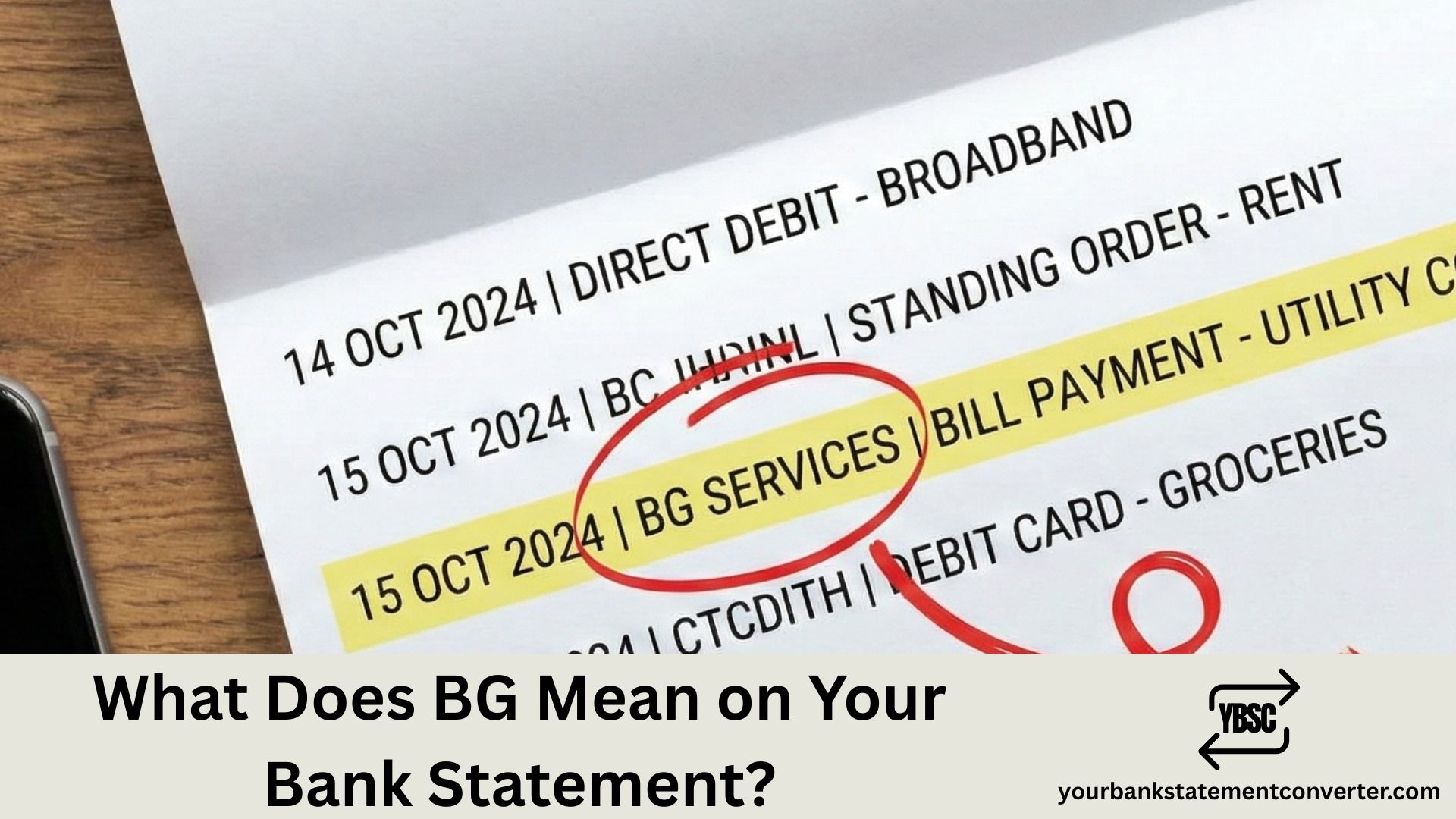
BG typically stands for Bill Payment or Bank Giro. It’s a transaction code used by UK banks to indicate certain types of payments or automated billing services. The exact meaning can vary depending on your bank and the specific transaction.
Common BG Transaction Types
Bank Giro Credits: These are payments made into your account through the bank giro system, a traditional payment method still used in the UK for receiving funds from organizations.
Bill Payments: Regular payments you’ve authorized to service providers, utility companies, or subscription services. The “BG” prefix helps categorize these as automated billing transactions.
Direct Debits and Standing Orders: Some banks use BG coding for recurring payments you’ve set up with merchants or service providers.
Why Does BG Appear on Your Statement?
BG transactions appear on your bank statement when:
- You’ve set up a direct debit or standing order with a company
- A business has processed a payment using the Bank Giro system
- An automated billing service has charged your account
- You’ve authorized recurring payments to a service provider
The specific merchant name usually appears alongside the BG code, such as “BG Services – Netflix” or “BG – British Gas.”
Is BG Services a Legitimate Charge?
In most cases, yes. BG services are legitimate payment processing methods used by reputable companies. However, you should always verify charges you don’t recognise.
How to Verify BG Charges
Check your active subscriptions: Review all services you’re currently subscribed to, including streaming platforms, gym memberships, utilities, and insurance policies.
Look at the transaction date: Regular BG charges often occur on the same date each month. This can help you identify which subscription it relates to.
Review the full transaction description: Your online banking or mobile app may show more details than your paper statement.
Check your email: Look for payment confirmation emails from merchants around the same date as the BG charge.
Contact your bank: Your bank can provide additional information about the merchant behind the transaction.
Common BG Service Providers in the UK
Several types of businesses commonly appear as BG services on UK bank statements:
Utility Companies: British Gas, EDF Energy, Scottish Power, and other energy providers often use BG billing codes.
Subscription Services: Netflix, Spotify, Amazon Prime, and similar services may appear as BG transactions.
Insurance Providers: Monthly insurance premiums for car, home, or life insurance can show as BG payments.
Telecoms and Broadband: Mobile phone contracts and internet service providers like BT, Sky, or Virgin Media.
Membership Organizations: Gym memberships, professional associations, or club subscriptions.
What to Do If You Don’t Recognise a BG Charge
If you see a BG transaction you can’t identify, follow these steps:
1. Don’t Panic
Many legitimate charges can appear confusing on bank statements because the merchant name used for billing differs from the brand name you know.
2. Investigate Thoroughly
- Search your emails for payment confirmations
- Check if any family members sharing your account made the payment
- Review your bank statement from previous months for similar charges
- Look up the exact transaction description online
3. Contact the Merchant
If you identify the company behind the charge, contact them directly to:
- Confirm the payment details
- Request itemized billing information
- Cancel the service if you no longer need it
4. Dispute Fraudulent Charges
If you’re certain the charge is fraudulent:
- Contact your bank immediately through their fraud hotline
- Use your banking app to report the transaction as unauthorized
- Request a chargeback under Section 75 of the Consumer Credit Act (for credit card transactions) or through your bank’s dispute process
- Monitor your account for additional suspicious activity
- Consider freezing your card to prevent further unauthorized charges
How to Convert Bank Statements with BG Transactions
If you need to convert your bank statements to Excel for accounting, expense tracking, or financial analysis, PDF bank statements can be challenging to work with—especially when trying to categorize different transaction types like BG services.
A bank statement converter tool can help you:
- Extract all transactions from PDF statements into Excel format
- Sort and filter BG transactions separately from other charges
- Categorize recurring BG payments for budgeting
- Analyze your subscription spending over time
- Prepare financial records for accountants or tax purposes
This is particularly useful for UK businesses and freelancers who need to track expenses, reconcile accounts, or manage multiple subscriptions.
Managing Your BG Subscriptions
Regular BG charges can add up quickly. Here’s how to stay in control:
Audit Your Subscriptions Regularly
Set a calendar reminder to review all your BG transactions quarterly. Cancel services you’re not using.
Set Up Spending Alerts
Most UK banks allow you to set up notifications for transactions above a certain amount or from specific merchants.
Use a Dedicated Card for Subscriptions
Consider using a separate debit or credit card exclusively for recurring BG payments. This makes tracking easier and limits exposure if the card details are compromised.
Keep a Subscription Spreadsheet
Maintain a simple spreadsheet listing:
- Service name
- Monthly cost
- Payment date
- Cancellation process
- Renewal date
BG Services vs. Other Transaction Codes
UK bank statements use various transaction codes. Here’s how BG compares:
DD (Direct Debit): Similar to BG but specifically for Direct Debit Guarantee-protected payments.
SO (Standing Order): Fixed payments you’ve instructed your bank to make regularly.
FPI (Faster Payment Inbound): Instant payments coming into your account.
FPO (Faster Payment Outbound): Instant payments leaving your account.
CHQ: Cheque payments (increasingly rare).
Consumer Rights and BG Payments
As a UK consumer, you have specific rights regarding BG transactions:
Direct Debit Guarantee
If the BG charge relates to a Direct Debit, you’re protected by the Direct Debit Guarantee. This means:
- You can cancel at any time
- You can get an immediate refund if an error occurs
- You must receive advance notice of payment amount changes
Chargeback Rights
For unauthorized BG charges on debit or credit cards, you can request a chargeback. Banks typically have 120 days from the transaction date to process disputes.
Consumer Credit Act Protection
Section 75 provides additional protection for credit card purchases between £100 and £30,000.
Preventing Unwanted BG Charges
Keep track of free trials: Many subscription services start as free trials, then automatically convert to paid BG charges. Set reminders before trial periods end.
Read the fine print: Understand cancellation terms before signing up for services that will create recurring BG transactions.
Use virtual cards: Some UK banks offer virtual card numbers for online subscriptions, making it easier to cancel by simply deleting the virtual card.
Monitor your statements weekly: Don’t wait for your monthly statement. Check your transactions through mobile banking at least weekly.
What Banks Say About BG Transactions
Major UK banks like Barclays, HSBC, Lloyds, NatWest, and Santander all use BG coding, though the specific format may vary slightly. If you’re unsure about any BG transaction:
- Check your bank’s transaction code guide (usually available online)
- Use the secure messaging feature in your banking app
- Call your bank’s customer service line
- Visit a branch with your statement for in-person assistance
Common Questions About BG Services
Can I block all BG transactions? You can’t typically block the BG code itself, but you can cancel individual direct debits or standing orders through your banking app or by contacting the merchant.
How long does it take to refund a disputed BG charge? UK banks usually investigate and resolve disputes within 15 working days, though complex cases may take longer.
Do all UK banks use BG coding? Most do, but some use alternative codes or descriptions. Transaction coding isn’t standardized across all banks.
Are BG charges always recurring? No, some BG transactions can be one-off payments processed through the Bank Giro system.
Conclusion
BG services on your bank statement typically represent legitimate bill payments, subscriptions, or Bank Giro transactions. While seeing unfamiliar codes can be concerning, most BG charges are simply automated payments you’ve authorized.
Stay vigilant by regularly reviewing your statements, maintaining a subscription tracker, and investigating any charges you don’t immediately recognise. If you need to analyze your spending patterns or convert PDF statements to Excel for easier tracking of BG and other transactions, using a dedicated bank statement converter can save considerable time and effort.
Remember, your bank is there to help. Don’t hesitate to contact them if you have questions about any transaction on your account, including BG services.

![What Is FSUK Payment on Bank Statement (Sports Direct Frasers Group)[2026]](https://yourbankstatementconverter.com/blog/wp-content/uploads/2026/03/What-Is-FSUK-Payment-on-Bank-Statement-Sports-Direct-Frasers-Group2026-300x169.jpg)
![What Does CR Mean on a Bank Statement (Credit Explained)[2026]](https://yourbankstatementconverter.com/blog/wp-content/uploads/2026/03/What-Does-CR-Mean-on-a-Bank-Statement-Credit-Explained2026-300x169.jpg)
![What Does BP Mean on a Bank Statement (Both Meanings Explained)[2026]](https://yourbankstatementconverter.com/blog/wp-content/uploads/2026/03/What-Does-BP-Mean-on-a-Bank-Statement-Both-Meanings-Explained2026-1-300x169.jpg)