
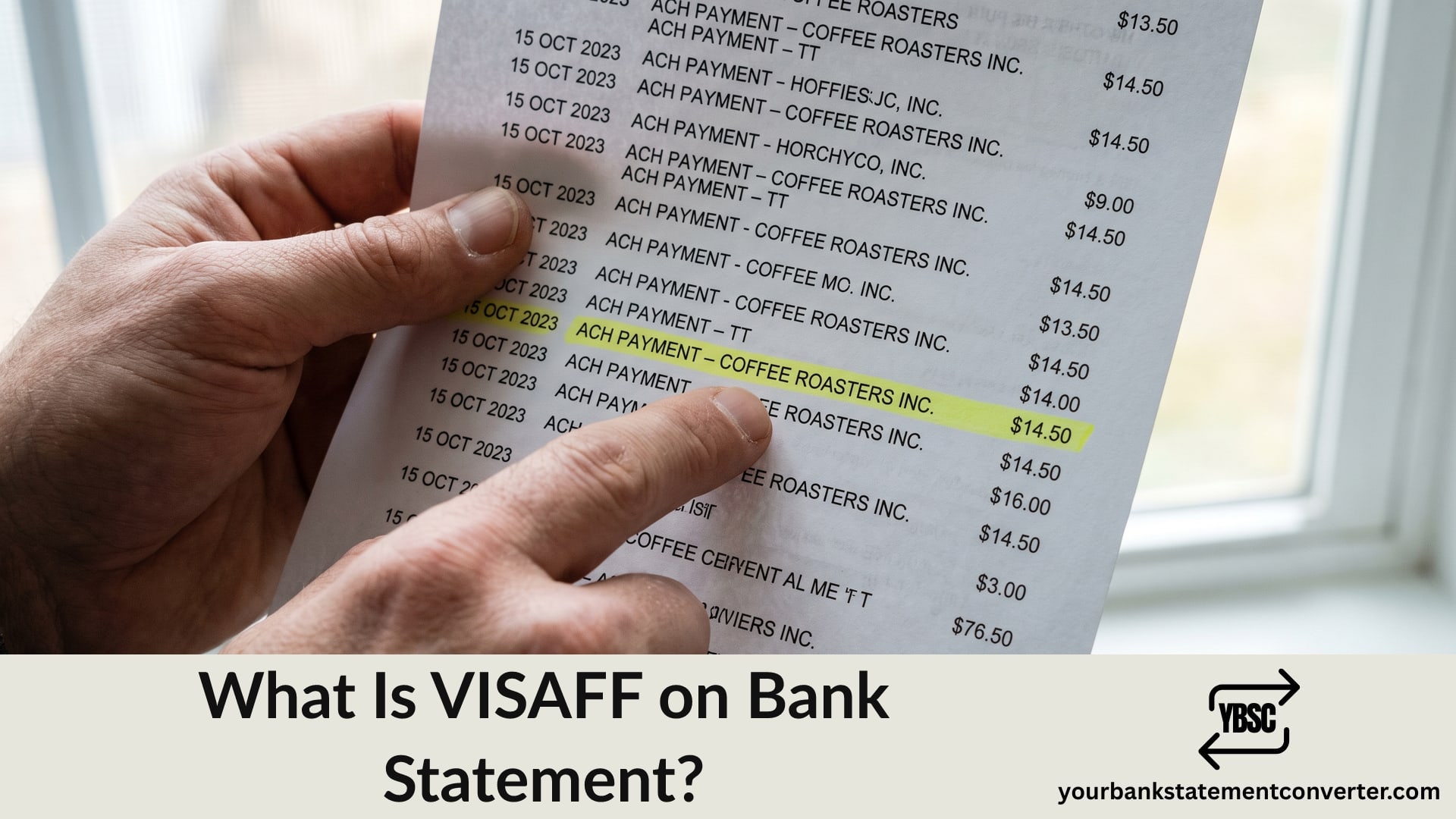
Most unfamiliar entries turn out to be money leaving your account. This one usually is not. VISAFF on a bank statement points to Visa Fast Funds, the service that pushes money onto a debit card, so the entry is normally a payment arriving.
This guide explains what Fast Funds is, why the sender’s name goes missing, which services use it, and what to do when the credit does not match anything you expected.
Key Takeaways
- VISAFF refers to Visa Fast Funds, a push payment straight to a debit card.
- The entry is usually a credit, meaning money coming in rather than a charge.
- Fast Funds is available on eligible Visa debit and prepaid cards in the UK.
- Common sources include betting withdrawals, wallet cashouts, gig payouts and refunds.
- The sender’s name often does not appear, which is why the entry looks anonymous.
What Visa Fast Funds Actually Does
Fast Funds is a push payment, meaning money is sent directly to your card rather than pulled from it. Most card activity works the other way round, which is why this entry reads oddly.
The mechanism sits on Visa’s network. It lets a business credit an eligible card in minutes rather than the days a bank transfer can take. Cardholders in the UK, Ireland and Spain can receive it on a supporting Visa debit or prepaid card.
Two things follow from that:
- The money arrives on the card, so it shows against the account the card belongs to
- Settlement is fast, often within minutes rather than the next working day
Check the Column Before Anything Else
This is the single most useful step, and it takes seconds.
Look at whether the amount sits in the paid-in column or the paid-out column. A VISAFF on bank statement entry should be money in. If the figure is a credit, nothing has been taken from you and the question becomes who sent it, not who charged you.
Getting the direction right saves a lot of unnecessary worry, and what are debits and credits on a bank statement explains how to read the two columns when the layout is unfamiliar.
Which Services Send VISAFF on Bank Statement Credits
Any business that wants to pay people quickly can use it, which makes the list broad.
The usual sources are:
- Betting and gaming withdrawals, where instant cashout is a selling point
- E-wallet withdrawals moving a balance back to your card
- Gig and freelance platform payouts offering instant pay
- Insurance or retailer refunds returned to the card rather than by transfer
- Peer-to-peer and money transfer services delivering to a card
Match the VISAFF on bank statement amount and date against a withdrawal you requested. A cashout you asked for earlier the same day is the most common explanation by a distance.
Why the Sender’s Name Is Missing
Here is the frustrating part, and the reason people search this term at all.
The descriptor records the rail the money travelled on, not the business that sent it. Fast Funds is the mechanism, so that is what reaches your statement. The betting site, wallet or platform behind it may not appear anywhere in the line.
Different banks handle this differently. Some append a merchant name, some show a reference number, and some show the wording alone. Entries naming the payment method rather than the payer are widespread. Our guide to what the abbreviations on a bank statement mean covers the pattern.
How to Trace Where It Came From
Work outwards from the amount and the timing.
- Check your withdrawal history on any betting, wallet or gig app you use
- Match the exact figure, since payout amounts are rarely round numbers
- Look at the timing, because Fast Funds usually lands within minutes of a request
- Check for a pending refund from a retailer or insurer
- Ask your bank for the merchant reference, which often carries more detail than the printed line
Banks can usually see more about a transaction than the statement shows, so asking is worthwhile when the first four steps draw a blank.
When an Unexpected Credit Matters
Money arriving unexpectedly still deserves a moment’s thought.
Do not spend it straight away if you cannot account for it. Funds credited in error can be reclaimed, and spending them first makes that awkward.
Be wary of anyone contacting you about it. One common fraud pattern sends money to an account, then asks the holder to forward it elsewhere. Moving money on at a stranger’s request can make you part of the chain.
Report an unexplained credit to your bank and let them trace it. That protects you if the payment turns out to have been misdirected.
Checking Every Credit Across the Year
Payouts scattered through a statement are easy to lose among ordinary spending.
Our bank statement converter turns PDF statements into clean, searchable spreadsheets. Filter for the descriptor, sort by date, and every Fast Funds credit lines up in one place so you can reconcile them against the withdrawals you requested. If you are working through more than a handful of pages, the pricing plans are measured in pages rather than users.
Conclusion
To sum up, VISAFF on a bank statement refers to Visa Fast Funds, a push payment sent directly to an eligible Visa debit card, and it is nearly always money arriving rather than leaving. Check the column first to confirm it is a credit, then match the amount and timing against a withdrawal or refund you requested. Where nothing matches, ask your bank to trace it rather than spending the money.
FAQ
1.What does VISAFF mean on a bank statement?
It refers to Visa Fast Funds, a service that pushes money directly onto an eligible Visa debit or prepaid card. The entry is normally a credit rather than a charge.
2.Is VISAFF money coming in or going out?
Coming in, in almost all cases. Check which column the amount sits in before anything else, because that settles whether you have been charged or paid.
3.Why does the sender’s name not appear?
The descriptor names the payment rail rather than the business behind it. Some banks add a merchant reference, but many show only the Fast Funds wording.
4.Which companies use Visa Fast Funds?
Betting and gaming sites, e-wallets, gig and freelance platforms, insurers and retailers all use it for quick payouts. Any business wanting to pay a card instantly can.
5.How long does a Fast Funds payment take?
Usually minutes rather than days, which is the point of the service. That speed is a useful clue when matching a credit to a withdrawal you requested.
6.I received money I cannot explain. What should I do?
Leave it untouched and report it to your bank so they can trace it. Never forward it on at someone else’s request, because that is a common pattern in money laundering scams.






